
Blog

  • Anthropic cofounder who majored in literature says knowing which questions to ask beats coding

    Anthropic cofounder who majored in literature says knowing which questions to ask beats coding

    [ad_1]

    AI may be restoring the importance of the liberal arts degree, at least according to the cofounder of one of the industry’s biggest players.

    Jack Clark, a billionaire cofounder of Anthropic and former journalist who majored in English literature and creative writing, said his literary education helped him become an influential figure in the world of AI.

    “I’m a literature graduate, and I don’t think you’d put that as a cofounder of a frontier AI company, but what turned out to be useful is that I got to learn a lot about history and a lot about the kind of stories that we tell ourselves about the future,” he said during the Semafor World Economy Summit on Monday.

    “That’s turned out to be, like, extremely relevant for AI in a way that I think people wouldn’t have predicted,” he added.

    For young people trying to figure out where they fit in the increasingly AI-fueled economy, their best bet may be learning to ask the right questions, he added.  

    “The really important thing is knowing the right questions to ask and having intuitions about what would be interesting if you collided different insights from many different disciplines,” he said.

    Clark claimed young people should avoid pursuing basic or “rote programming” and added that the degrees that are going to become even more relevant in the future are the ones that involve “synthesis across a whole variety of subjects and analytical thinking about that,” he said.

    Cracks in STEM

    Clark’s insight comes as more young people are grappling with what an AI-dominated future looks like for them. For decades enrollment in STEM education exploded, partly owing to a spike in computer science interest that helped increase science and engineering graduate enrollment by more than a third between 2000 and 2015, according to the National Center for Science and Engineering Statistics (NCSES). Between 2013 and 2023 STEM job growth also outpaced non-STEM job growth with a 26% increase, compared with a 9% increase, respectively, according to the NCSES, which is part of the National Science Foundation. 

    While STEM jobs are projected to grow by 6% through 2024, some cracks have started to appear thanks to AI. A report by Anthropic researchers Maxim Massenkoff and Peter McCrory last month found that AI can theoretically take over 94% of computer and math tasks. Computer programming jobs are among those that are most exposed to AI, the report found

    Leaders at companies like Anthropic that are building the worker-replacing tech are increasingly sounding the alarm about job displacement. Anthropic CEO Dario Amodei notably claimed AI would eliminate half of all entry-level white-collar jobs. Meanwhile, the creator of Anthropic’s Claude Code, Boris Cherny, said earlier this year that “coding is practically solved” and that “we’re going to start to see the title ‘software engineer’ go away.” 

    For young people, the influx of AI across industries poses a significant risk as they are still trying to establish themselves in the workforce. During the same interview Monday, Clark admitted, “I see potential weakness in early graduate employment in some industries,” without specifying which industries. He hedged his comments by saying, “I haven’t seen anything beyond that,” regarding AI-linked layoffs, although he emphasized AI will upend businesses and how business is conducted. 

    A study by the Federal Reserve Bank of New York showed the unemployment rate for recent college graduates stood at 5.7% at the end of last year, up from 3.6% pre-pandemic and above the general unemployment rate of 4.3% in March. The share of college graduates in jobs that typically don’t require a college degree was also at its highest rate since the pandemic at 42.5% at the end of last year, a potential sign that young graduates are struggling to find jobs in their field of study.

    Frustrated by a laggard job market, some young people have started to consider entering the trades. Vocation-focused community college enrollment increased 16% last year, according to data from the National Student Clearinghouse. Others have eschewed full-time positions in favor of multiple part-time jobs that allow more freedom.

    Liberal arts comeback

    At the same time, there is some evidence that a liberal arts degree is becoming more relevant, at least in tech. Jaime Teevan, Microsoft’s chief scientist, said last month that a liberal arts education will be important for developing the soft skills that are still needed when other work is delegated to AI.

    “Metacognitive skills will be very important—flexibility, adaptability, experimentation, thinking critically, being able to challenge things. Developing critical-thinking skills requires friction, doing things that are hard, doing deep thinking,” Teevan told the Wall Street Journal

    Michael Oakes, the executive vice president for research and economic development at Case Western Reserve University, told Fortune that a classical liberal arts degree will be important because it develops workers who can navigate deep nuance and culture—qualities he said AI cannot replicate.

    “As AI lowers the barrier to technical execution, the labor market premium is shifting toward a human layer of rigorous critical reasoning,” Oakes said.

    Nontraditional positions in tech where a liberal arts education is important may be growing. Just this week, an AI ethicist and senior research associate at the University of Cambridge said in a post on X that he was hired as a philosopher for Google DeepMind, Alphabet’s AI lab. Clark for his part said Monday that Anthropic also employs several philosophers. 

    “When was the last time you heard that a philosophy degree was like a great job prospect?” Clark said. “But it turns out that now it is.”

    [ad_2]

    Source link

  • Augusta Precious Metals review: What to know in 2026

    Augusta Precious Metals review: What to know in 2026

    [ad_1]

    In times of economic uncertainty or high inflation, gold and silver often rally. Precious metals tend to preserve buying power far better than fiat currency.

    But what if you’re worried about the hard-earned money you’ve put toward retirement?

    Augusta Precious Metals helps you turn your current retirement funds into a gold IRA and/or silver IRA. You can buy coins, rounds, and bars for any occasion, as well, but its bread and butter is precious metals IRAs.

    Here’s what you need to know about Augusta Precious metals.

    What is Augusta Precious Metals?

    Augusta Precious Metals is a gold and silver dealer primarily focused on precious metals IRAs. It also sells metals to own outside an IRA—but its specialty is helping you to open an IRA with gold and/or silver. 

    Augusta has been in business since 2012, exhibiting its trustworthiness as a business in an industry with commonly high dealer turnover. It’s one of the highest-rated gold companies around, receiving excellent reviews on Trustpilot and earning zero complaints with the Better Business Bureau in the past three years.

    Augusta Precious Metals

    Minimum deposit to start an account:

    $50,000

    Augusta Precious Metals logo

    • Year Founded: 2012
    • Company Headquarters: Casper, Wyoming
    • CEO: Isaac Nuriani

    What is a precious metals IRA?

    A precious metals IRA serves the same purpose as a conventional IRA: It lets you invest your retirement savings in a tax-advantaged account to grow (or preserve) your funds for after you retire.

    The difference is that “alternative investments” like gold and silver require that you open a “self-directed” IRA. This will let you use your IRA money to buy precious metals. You can also use regular funds to buy gold and silver and deposit those into your IRA (up to the IRS-stipulated maximum each year).

    When buying gold or silver for an IRA, you cannot hold the physical metals yourself. You must use an IRS-approved custodian to house your investment, instead.

    How opening an IRA with Augusta Precious Metals works

    Opening an IRA through Augusta is simple. Here’s a quick and dirty step-by-step:

    1. Peruse Augusta’s educational materials: The Augusta Precious Metals website offers free checklists, guides to precious metals IRA costs and risks, articles on scams to watch for, and more.
    2. Set up a self-directed IRA: Augusta helps you to find a trusted custodian to handle your precious metals IRA. If you’ve already got a self-directed IRA, you can typically transfer or roll over the funds without getting dinged.
    3. Invest at least $50,000: Augusta enforces a minimum investment of at least $50,000 to open an IRA. This will mostly have to come from your current retirement funds, as you can only add up to $8,600 in new funds per year, depending on your age.
    4. Choose your gold and silver: Augusta representatives will explain with patience and detail everything you need to know about the metals you buy, and they will help to narrow down the selection to products that fit your strategy.

    Products offered by Augusta Precious Metals

    Augusta Precious Metals sells more than 40 different coins, rounds, and bars—the overwhelming majority of which are IRA-eligible. Augusta clearly tags each eligible product with an “IRA approved” label to help those interested in funding a precious metals IRA clearly identify which bullion qualifies according to IRS rules.

    Popular options for funding your IRA include:

    • 1oz Gold American Eagle Coin
    • Gold American Buffalo 1oz BU coin
    • 1oz Gold Bullion Bar
    • 1oz Silver Eagle Coin
    • 1oz Canadian Silver Maple Leaf Coin

    Unfortunately, Augusta does not list live prices on its website. You’ll instead have to call to get those numbers. It’s a bit of an inconvenience—but the company representatives are famously low-pressure, as they’re salaried and don’t get a commission from making a sale.

    Pros and cons

    Pros

    • Stellar rating on Trustpilot
    • No BBB complains within the past three years
    • Well-established metals dealer

    Cons

    • Does not disclose price of metals on website
    • Relatively few total reviews when compared to top competitors
    • High minimum investment to open a precious metals IRA

    Check Out Our Daily Rates Reports

    Augusta Precious Metals buyback program

    No reputable precious metals company in the U.S. guarantees it’ll buy back the gold or silver it sells to you; if a dealer makes that claim, take it as a red flag.

    As you’d expect, Augusta Precious Metals doesn’t promise a buy back. However, it has historically purchased metals back from its customers, publishing a landing page that comprehensively outlines its policy (not all dealers even advertise a buyback program).

    Augusta states that they’ll typically pay more for gold and silver purchased through them than if you were to sell it elsewhere. You can expect to get around 5% less than Augusta is currently selling the same product for. In other words, if you were to sell back a coin that Augusta is currently selling for $2,000, it would likely pay you $1,900. Augusta also will not charge a separate liquidation fee when buying back.

    Augusta touts what they call a “Highest Buyback Guarantee.” This means that when you sell your metals back to Augusta, you can cancel within 24 hours if another buyer offers you more.

    What customers have to say

    It’s virtually a rule that online reviews skew negative, particularly in the financial world, as customers who have experienced issues are typically much louder than those with a seamless experience.

    That said, Augusta Precious Metals maintains a stellar 4.8 stars on Trustpilot and a 4.93 stars with the Better Business Bureau. Customers routinely comment on the courteous and patient representatives—and the lack of high-pressure tactics. They’re quick to answer any and all questions, and they outline pricing and fees very transparently.

    Negative reviews tend to focus on the anecdotal inability to retrieve hard copies of services and misleading buyback expectations. Customers also don’t appreciate that you have to call the company to see gold and silver prices, as the website does not have live prices.

    Is Augusta Precious Metals right for you?

    A sea of precious metals dealers exists. To know if Augusta is a good option for you, ask the following questions:

    Can you afford the minimum investment?

    Augusta Precious Metals is very customer-friendly—with the exception of its $50,000 minimum investment. If you can’t swing that dollar amount, you’ll need to find a dealer with a lower minimum requirement.

    Do you want to invest in precious metals other than gold or silver?

    Augusta Precious Metals only deals with gold and silver. If, for example, you want to invest your retirement in platinum, you’ll have to look elsewhere.

    Do you value the volume of reviews more than the star rating?

    Augusta Precious Metals has been in business since 2012—but the number of reviews it has on sites like Trustpilot pales in comparison to other popular dealers. While Augusta has some of the highest ratings of any precious metals company, it simply doesn’t have that high of a review count. You’ll find many more data points by looking at companies like Lear Capital and Silver Gold Bull.


    The takeaway

    Augusta Precious Metals is a top-tier gold and silver dealer specializing in precious metals IRAs. It’s a well-established company with over a decade of experience and a sky-high customer rating. 

    If you’re anxious about the direction of the U.S. dollar and would like to preserve the value of your retirement, Augusta can help you to convert your current IRA or 401(k) into a precious metals IRA, thoroughly educating you along the way. 

    Frequently asked questions

    What ratings does Augusta Precious Metals receive from the BBB, Trustpilot, and other review sites?

    Augusta Precious Metals routinely receives 4.8 stars or above on popular review sites like the BBB and Trustpilot.

    What is the minimum investment required to open a gold IRA with Augusta Precious Metals?

    The minimum investment required to open a gold IRA with Augusta Precious Metals is $50,000.

    How does Augusta Precious Metals handle transparency around pricing and fees?

    Augusta Precious Metals does not list all fees and metals prices on its website. But the company is quick to disclose these details with a quick call.

    Is this gold IRA company better suited for high-net-worth investors?

    Augusta Precious Metals is well-suited for high-net-worth investors, as its $50,000 minimum investment is one of the highest we’ve seen in the industry.

    What do most Augusta Precious Metals reviews say about the company’s reputation?

    Most Augusta Precious Metals reviews are glowing, reinforcing the company’s solid reputation as a gold and silver dealer. They harp on the knowledgeable and patient staff, as well as the low-pressure sales environment.


    [ad_2]
    Source link

  • Trump’s White House: America is short 10 million houses

    Trump’s White House: America is short 10 million houses

    [ad_1]

    White House economists estimate the United States has a shortage of 10 million houses, according to a new report out Monday — and say regulatory cuts could lead to more construction to stabilize prices, increase home ownership and fuel faster economic growth.

    The analysis, part of the Economic Report of the President, outlines both a political risk and a messaging opportunity for President Donald Trump, whose public approval has slumped because of concerns about his tariffs, the Iran war and his unfulfilled promises to slash inflation and unleash stronger growth.

    Trump signed two executive orders in March directing federal agencies to reduce housing regulatory burdens and make it easier for smaller banks to provide mortgages but he’s been slow to take other steps that would show that high housing costs are a top priority for his administration.

    The White House has been trying to focus on housing and other affordability issues for months to get ready for what’s expected to be a challenging midterm season for Republicans, but it has been thrown off course by a series of global issues. In January, a speech at the World Economic Forum in Davos, Switzerland, that had been billed as focusing on housing turned into a showdown for Trump over control of Greenland.

    Meanwhile, the Iran war has driven up the cost of buying homes, with average rates for 30-year mortgages jumping from just under 6% to 6.37%.

    Trump also has argued in favor of keeping home prices high to protect values for existing owners. “I don’t want to drive housing prices down,” Trump told his Cabinet earlier this year. “I want to drive housing prices up for people that own their homes, and they can be assured that’s what’s going to happen.”

    The report lays out a blueprint on housing

    The housing chapter of the annual economic report, obtained by The Associated Press before its release, lays out a blueprint for how more home construction would help the middle class and the overall economy, setting up an argument that Trump could make to voters.

    Put together by staff at the White House Council of Economic Advisers, it finds there would be 10 million more houses in the country if “homebuilding and the growth of the single-family housing stock had continued at their historical pace instead of falling dramatically” after the 2008 global financial crisis. That crisis was caused largely by a wave of defaults in the housing market, where prices had been fueled by problematic lending practices.

    The analysis notes that home prices have risen 82% since 2000, while incomes are up just 12% — a mismatch that had been masked for a period by historically low mortgage rates. But when rates jumped with inflation in the aftermath of the pandemic, monthly mortgage costs also rose for buyers and affording a home, a signifier of middle class status, became a top concern for voters under 40.

    The White House maintains that the executive orders in March, in addition to the plans to purchase mortgage-backed securities, show that the president is focused on housing issues.

    The report says that various regulations on home construction, which it calls “the bureaucrat tax,” add more than $100,000 in costs to building. That cost includes changing the building codes over the past decade, compliance costs and zoning approval fees, among other expenses.

    By the report’s estimates, a reduction in those regulatory costs could help spur construction of as many as 13.2 million homes. That could add on average 1.3 percentage points to annual economic growth over the next decade and support 2 million manufacturing and construction jobs, it argues.

    Trump could decide to make federal funding to state and local governments contingent on reducing some of the regulations, according to an administration official, who insisted on anonymity to discuss the report before its release.

    The report also attacks the green energy housing standards introduced during the Biden administration as a factor in increasing construction costs. Those steps gave preferences for more efficient air conditioning units and water heaters as well as higher standards for the related duct work.

    But getting rid of some of those requirements could increase other costs for homeowners over the long run, such as utility bills.

    The report relies on a 2021 analysis by National Association of Home Builders that says the standards could add up to $31,000 to the price of a new home, while it could take as many as 90 years for a homebuyer “to realize a payback on the added cost of the home.”

    It is not clear how much savings would occur from rolling back Biden-era housing standards because of existing legal challenges regarding their enforcement and different practices by states. In March, a federal judge in Texas agreed with 15 states led by Republicans that said the standards for federally backed housing were unlawful.

    [ad_2]

    Source link

  • Another month, another record-high home price: March hits $408,800—the 33rd straight increase

    Another month, another record-high home price: March hits $408,800—the 33rd straight increase

    [ad_1]

    Home prices just did it again. For the 33rd consecutive month, the median price of an existing home climbed—this time to $408,800 in March, a record high for the month, according to the National Association of Realtors’ existing home-sales report. Politicians from President Donald Trump to New York City Mayor Zohran Mamdani have campaigned on bringing housing costs down. So far, the market isn’t cooperating.

    The 1.4% year-over-year price increase came even as sales of existing homes fell 3.6% from February, a notable stumble heading into what is typically the market’s busiest season.

    Even as politicians nationwide promise to build more homes to lower prices, inventory hasn’t yet matched those promises, and home prices remain elevated.

    “Inventory remains a major constraint on the market,” NAR chief economist Dr. Lawrence Yun said in a statement. “The inventory-to-sales ratio, or supply-to-demand ratio, is below historical norms. An additional 300,000 to 500,000 homes for sale would help bring the market closer to normal conditions.”

    Home prices are up 60% compared to pre-pandemic figures as the country endures a prolonged housing shortage, estimated at about 4.7 million according to a 2025 Zillow report. The market has gotten so bad that many young buyers are leaning on the “Bank of Mom and Dad” for help as the median age of the first-time homebuyer hit 40 last year. Some employers are even shelling out $6,500 to help some workers onto the property ladder.

    Why the housing market is failing buyers even as inventory grows

    The numbers become even more jarring in context. By most measures, this should be a buyer’s market. Yet most buyers still can’t afford to act on it. In February, there were 46.3% more sellers than buyers across the U.S., representing a gap of 629,808—the largest gap in real estate firm Redfin’s records going back to 2013. That number is up 30% from a year ago, when the mismatch was still north of 449,000.

    On the flip side, homeowners are benefitting from this market: Yun noted that “the typical homeowner has accumulated $128,100 in housing wealth over the past six years.”

    NAR’s principal economist and director of real estate research [name needed] told Marketplace the market is still operating at about 80% of a normal spring pace. But homesellers are pricing their homes above the market. “We’re seeing more homes hit the market,” she said. “That’s positive, but many of those homes are still priced above what typical households can comfortably afford.”

    In contrast, Yun said lower consumer confidence and softer job growth have sidelined buyers. “March home sales remained sluggish and below last year’s pace,” he said.

    The Michigan consumer sentiment index just hit its lowest point in its 74-year history, plummeting to 47.6, falling below its previous record set in mid-2022, when inflation blew past 9%. That trend is only expected to accelerate as the Iran war has driven up energy costs. Moreover, nearly three in five Americans think AI will hinder their ability to purchase a home as the technology threatens to automate jobs.

    Mortgage rates are also elevated, sitting at 6.37%, slightly down from the past week though they risk climbing further as the Iran war pushes oil prices higher. While oil prices have fallen from a peak of above $110, they remain high at about $94 per barrel.

    “The threat of higher-for-longer oil prices continued to keep Treasury yields elevated, and mortgage rates finished last week higher,” Joel Kan, the Mortgage Bankers Association’s vice president and deputy chief economist, said in a statement.

    [ad_2]

    Source link

  • Goldman Sachs makes surprise jump into Bitcoin ETFs with a product one analyst dubs “Boomer Candy”

    Goldman Sachs makes surprise jump into Bitcoin ETFs with a product one analyst dubs “Boomer Candy”

    [ad_1]

    Goldman Sachs has long been content to watch the crypto craze from the sidelines but, in a surprise move, the big bank on Tuesday revealed plans for its own product in the form of a “Bitcoin Premium Income ETF.” 

    The new Goldman fund, which was described in a regulatory filing, is structured a little differently from traditional spot Bitcoin ETFs. The fund aims to buy other exchange traded products that hold Bitcoin, rather than hold Bitcoin itself, and sell call options on those funds. 

    Goldman Sachs described the product as an “options overwrite strategy” that creates regular income from the sale of the call positions. The firm added that, in modest or falling Bitcoin markets, the ETF could outperform spot Bitcoin ETFs, but that its performance could lag those funds during times when Bitcoin experiences rapid price appreciation.

    Although this is Goldman’s first Bitcoin ETF filing, Goldman Sachs will not be the first issuer to offer a Bitcoin ETF with an options strategy. Grayscale offers a Bitcoin covered call ETF, and BlackRock has filed for a similar product. 

    Goldman has long had a hot-and-cold relationship with Bitcoin. In 2020, leaked slides showed the bank saying Bitcoin’s appreciation was based primarily on people being willing to pay more for it, called it a conduit for illegal activity, and likened it to Dutch tulip mania. 

    However, as Bitcoin and crypto have become more firmly embedded in the financial sector, Goldman has become more entwined with crypto. The bank was named an authorized participant on BlackRock’s Bitcoin ETF, and regulatory filings show Goldman holds a number of Bitcoin and crypto-linked ETFs and equities. Goldman Sachs CEO David Solomon has recently expressed interest in tokenization and stablecoins. 

    With the filing, Goldman Sachs becomes the latest major U.S. bank to make a foray into proprietary Bitcoin funds, following Morgan Stanley’s Bitcoin ETF launch last week. 

    Bloomberg ETF analyst Eric Balchunas called the filing a shock on X and said that the filing may indicate that Goldman sees an opportunity to leapfrog current Bitcoin ETF leader BlackRock. Balchunas also speculated Goldman clients may want Bitcoin exposure but are willing to “give up some upside for lower downside and income,” a structure the analyst referred to as “Boomer Candy.”

    FORTUNE CRYPTO 100: Fortune’s new annual list will recognize companies driving meaningful progress in digital assets—from infrastructure and investment to applications and adoption. Is your organization is shaping the future of blockchain? Submit your nomination today.

    [ad_2]

    Source link

  • Trump’s tariffs dealt an economic blow to all 50 states, study finds

    Trump’s tariffs dealt an economic blow to all 50 states, study finds

    [ad_1]

    When the Trump administration began its tariff campaign in 2025, some of the loudest critics focused on the consequences for Midwestern farmers or for border states. A year in, the impact of tariffs has become clearer, and some research suggests no state has emerged completely unscathed.

    Early last year, the Trump administration established one of the most sweeping tariff regimes in the country’s history, including a 10% duty across the board and country and commodity-specific penalties, in some cases as high as 50%. These tariffs were widely expected to have a biting effect on the economy. But while some observers assumed the immediate pain would be confined to agricultural producers or states heavily reliant on international supply chains, the shock proved far more widespread. 

    Trump’s tariffs effectively revealed 50 different trade vulnerabilities across the country, each dictated by a state’s own production and consumption patterns, according to a paper published last week by researchers at Ohio State University and Cornell University. By the end of 2025, even states that had never depended on buying goods from abroad were feeling tariff tremors in their own way.

    The peer-reviewed study, published by the Agriculture and Applied Economics Association, analyzed where and how goods are produced, shipped, and consumed in each U.S. state. 

    The authors found that tariffs led to “immediate shocks” for net importers who were suddenly tasked with absorbing the bulk of levy payments. But consequences for states that rely on exporting agricultural products internationally weren’t far behind, as U.S. trading partners swiftly moved to retaliate. Even states that neither import nor export huge quantities of goods ultimately had to pay the price of tariffs in the form of higher food prices, as farmers began passing costs down to consumers.

    “The United States doesn’t have one agricultural trade exposure–it has 50 different ones,” Wendong Zhang, an economist at Cornell and one of the study’s authors, said in a statement

    Some for everyone

    The economic story of tariffs last year was one of a slowly cascading domino effect that gradually involved more and more parts of the U.S. economy. Early evidence suggested U.S. businesses and importers were shouldering most of the costs associated with tariffs. Larger retailers, in particular, were able to absorb most of those added costs, with only marginal consequences for customers, by front-loading orders before tariffs kicked in and drawing down inventories. 

    But the writing was always on the wall for consumers. Small businesses with fewer resources were among the first to be forced to raise prices, eventually joined by companies including Amazon, Walmart, and Target. By 2026, U.S. businesses and consumers were covering almost 90% of tariff costs, according to Federal Reserve research.

    The knock-on effects have been primarily felt by agricultural and coastal states that rely on exports, the Cornell and Ohio State study found. Trading partners, including Canada and China, responded to Trump’s duties with retaliatory tariffs that have hit these U.S. states hard. In the first half of 2025, for example, agricultural exports to China fell to $5.5 billion from $12 billion in 2024, according to AgAmerica, an agricultural lender. This was primarily due to a dramatic collapse in Chinese soybean purchases from the U.S., which pushed tens of thousands of American soybean farmers into the middle of an escalating trade war.

    The ripples from retaliatory tariffs aren’t contained to Midwestern staple crops. The study’s authors found that Canadian crackdowns on U.S. alcohol imports had consequences for Kentucky and Tennessee, both states with large bourbon and whiskey industries that are heavily exported. The U.S.-Canada trade war has also dealt a blow to exporters in the Northeast, where states previously sold around two-thirds of their milled grain, non-cereal crops, and their live animals and fish to Canada.

    Steering clear of international trade has done little to help Americans either. As farmers have faced higher costs for livestock feed, fertilizer, and machinery, those higher costs now appear on grocery store shelves across the country as food inflation, according to the study. 

    With prices for items like fertilizer expected to rise even higher due to the war in Iran, and Trump promising to preserve his tariff policy despite orders from the Supreme Court to abandon his most extreme duties, all American consumers are likely to feel the sting of more expensive food, regardless of where they live.

    “When processors face higher input costs, they pass it along,” Zhang said. “Eventually, the consumer in a New York grocery store is paying more for something that traces back to a trade dispute in Washington–even if New York itself exports very little.”

    The upshot of Trump’s trade regime, according to the study, is that U.S. trading partners could continue gravitating towards other providers, eroding established import and export patterns across the U.S. If the consequences of tariffs a year in are any indication, the authors warned, a trade policy designed to crack down on importers could end up undermining and altering the makeup of regional economies nationwide.

    [ad_2]

    Source link

  • Bitcoin, Ethereum approach two-month highs as markets optimistic over U.S.-Iran peace negotiations

    Bitcoin, Ethereum approach two-month highs as markets optimistic over U.S.-Iran peace negotiations

    [ad_1]

    Crypto markets are betting that the U.S. and Iran war may be progressing towards peace. Bitcoin rose 5% over the past 24 hours to around $75,000 early Tuesday afternoon, nearing its highest mark since early February, according to data from Binance. The world’s second largest cryptocurrency, Ethereum, notched an even bigger day-over-day jump, rising 7% to almost $2,400 to record a two-month high.

    The total market capitalization of all cryptocurrencies rose 4% to $2.6 trillion, mirroring gains in the stock market. On Tuesday morning, the S&P 500 increased 1%, and the Nasdaq jumped nearly 2%. “The rise in cryptocurrencies was driven by an impressive recovery in risk appetite in traditional financial markets,” said Alex Kuptsikevich, chief market analyst at the online brokerage FxPro, in a note.

    Bitcoin’s rise above $75,000 is a dose of optimism for traders who have watched the world’s largest cryptocurrency struggle to record a sustained rally amid a volatile six months.

    In October, Bitcoin recorded an all-time high of around $126,000 but then plummeted after Trump issued a new set of tariff threats against China. The broader digital assets market failed to recover, and prices continued to drop through the end of January until Bitcoin began to hover between $60,000 and $75,000 throughout February and March.

    The cryptocurrency’s price fluctuations have since largely tracked the broader ups and downs of the financial markets, which have been whipsawed by conflict in the Middle East and worries over rising oil prices. 

    The recent optimism in traditional financial markets comes after weekend peace negotiations between the U.S. and Iran. Vice President JD Vance flew to Pakistan on Saturday to participate in marathon talks with Iranian officials over the prospect of ending the month-long conflict between the two countries and opening up the Strait of Hormuz, a key chokepoint for the world’s oil trade. 

    While the talks were unsuccessful, President Donald Trump claimed on Monday that Iran still wants to negotiate an end to the conflict. “We’ve been called by the other side and they would like to make a deal very badly,” he said.

    And analysts believe that, as stock markets surge amid peace negotiations, the crypto market has a large runway to rebound. 

    “While the S&P 500 is approaching record highs,” said Ish Asad, a research analyst at Bitwise, “Bitcoin remains down nearly 50% from its height and appears to have far more upside ahead.”

    FORTUNE CRYPTO 100: Fortune’s new annual list will recognize companies driving meaningful progress in digital assets—from infrastructure and investment to applications and adoption. Is your organization is shaping the future of blockchain? Submit your nomination today.

    [ad_2]

    Source link

  • United Airlines CEO Scott Kirby lies on his office floor and takes 20-minute naps—and he says it doesn’t mean he’s accomplished any less

    United Airlines CEO Scott Kirby lies on his office floor and takes 20-minute naps—and he says it doesn’t mean he’s accomplished any less

    [ad_1]

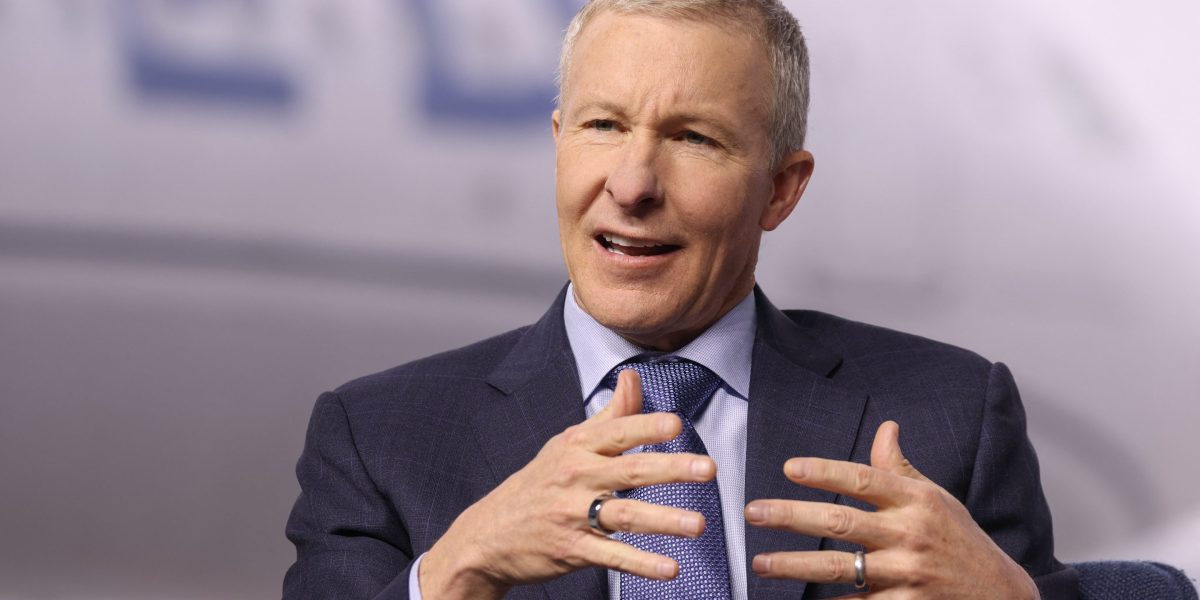
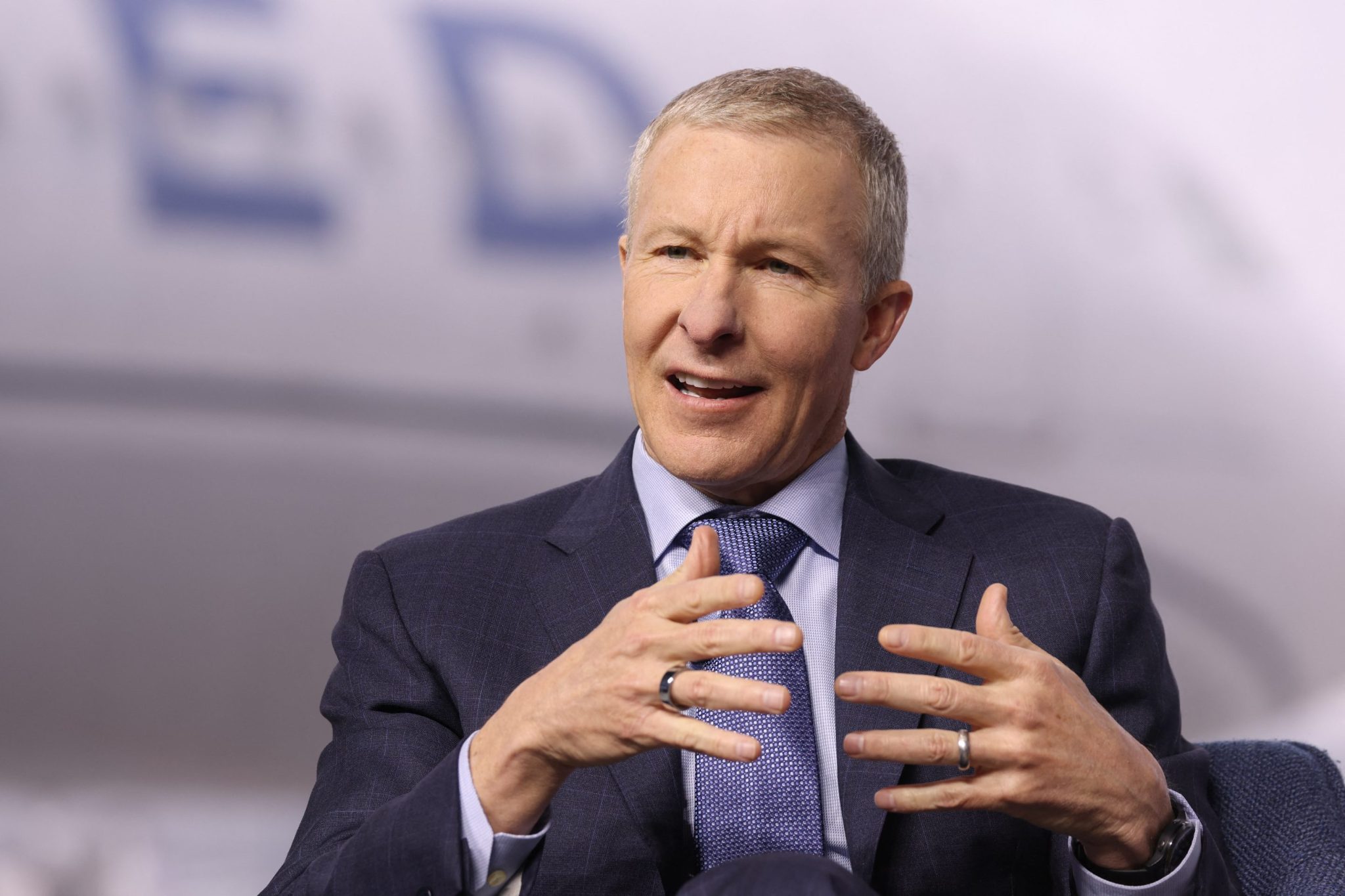
    “A thing I do that people have thought is weird is that, throughout my whole career, when I’m in the office, I’ll close the door and take a 20-minute nap,” Kirby recently said in an interview with McKinsey and Company

    “When I first got to United, people were, like, ‘Oh my God, where do you take a nap?’ I said, ‘I lay on the floor,’” he continued. “They said, ‘We’ve got to get a couch in here!’ They were all stressed out.”

    Kirby’s habit may come as a surprise, but the leader says taking a break keeps him fueled to run the $30.1 billion airline giant. 

    “If I take a 20-minute nap, I’ve accomplished more than anything else I would have accomplished in that time,” the CEO explained. “When you’re tired, your brain is not 100 percent. If you’re not 100 percent, you shouldn’t be making decisions.”

    And he’s stuck by his routine break throughout his entire career—from serving as the president of U.S. Airways and American Airlines for years, to his current six-year CEO stint at United. And research shows the U.S. Air Force Academy alum may have picked up on a leadership hack; a “power nap” of 30 minutes or less has been found to boost alertness and mood, improve mental clarity, and fight off fatigue, according to a 2024 study from Harvard Medical School. 

    United Airlines’ CEO caps his meetings at four hours a day to think and read

    In helming one of the world’s biggest airline groups, Kirby has also laid some ground rules to avoid burnout. The United Airlines leader has one boundary on his packed calendar: “no more than four hours of meetings a day.” 

    Instead of constantly sitting in on long-winded conversations, Kirby said he’d much rather use the time to think or call others. He described his workday as “pretty unstructured,” but makes an effort to be as efficient with limited hours in the day—which also frees up the opportunity to invest in his intellectual pursuits.

    “Some important things are, one, having time to think instead of sitting in meetings you don’t need to be in,” Kirby told McKinsey. “And two, you need to be a genuinely curious person, reading about a very wide variety of subjects.”

    Under his personal operating model, Kirby carves out reading sessions every day. And by picking up a book and squaring away tedious meetings, it could lead to better ideas for the business, he explained. 

    “I read about three hours a day, on average,” the CEO continued. “And you just never know when the things that you’ve read are going to click together.”

    The leaders who have their own boundaries: no meetings or emails

    Just like Kirby, the CEO of Berlin-based tax app Taxfix, Martin Ott, isn’t willing to waste work hours on duties that don’t make much impact. 

    The executive, who also led as Facebook’s managing director for Northern and Central Europe operations in 2012, picked up a few lessons working under Mark Zuckerberg. In those early days of Meta’s evolution, Ott learned to pour all of his time into what matters most—and that doesn’t include inessential meetings. 

    “One of the things I’m also passing on is, there’s only so many hours in a day,” Ott told Fortune last year. “Ask yourself, what is the real one thing you could do today to really have an impact, make a difference? Ask yourself, do you need to be in that meeting or not?”

    Other CEOs have taken a more direct approach to the time-suck of meetings. Fellow airline leader Bob Jordan, the chief executive of Southwest Airlines, set a new rule in place for 2026: his calendar will stay completely clear every Wednesday, Thursday, and Friday afternoon. No meetings are allowed—he’s protecting his time to “think about what’s important right now.” 

    “When you first start, it’s easy to confuse busyness and going to meetings with leadership,” Jordan said at the New York Times DealBook Summit in December 2025. “Because what we all find, I’m sure, is there’s no time to ‘work,’ and you confuse going to meetings with the work.”

    Airbnb CEO Brian Chesky is preserving his time by setting boundaries around both meetings and emails—two daily menial tasks begrudged by workers everywhere. Instead of suffering through the pesky tasks, the short-term rental leader prefers to text and call rather than email: the one thing about his job he “hated the most” pre-pandemic. Chesky has also pushed morning meetings back to at least 10 a.m.

    “Don’t apologize for how you want to run your company,” Chesky told theWall Street Journal in 2025. “When you’re CEO…you can decide when the first meeting of the day is.”

    [ad_2]

    Source link

  • IMF slashes global growth forecast, blaming ‘war in the Middle East’ for halted momentum

    IMF slashes global growth forecast, blaming ‘war in the Middle East’ for halted momentum

    [ad_1]

    The Iran war has stalled the world’s economic momentum this year, likely pushing growth lower compared to 2025, the International Monetary Fund warned Tuesday.

    The IMF downgraded its forecast for global growth to 3.1% in 2026 from the 3.3% it had forecast back in January. The expected growth would mark a deceleration from a 3.4% expansion in 2025.

    U.S. and Israeli strikes on Iran — and Tehran’s closing of the Strait of Hormuz and retaliatory strikes on oil refineries and other energy infrastructure in neighboring countries — have driven oil and gas prices sharply higher around the world.

    As a result, the IMF marked up its expectation for global inflation this year to 4.4% from 4.1% in 2025 and from the 3.8% it had forecast for this year in January.

    Until the war, the world economy had shown surprising resilience in the face of President Donald Trump’s protectionist policies, which built a wall of import taxes around the United States, the world’s biggest economy and once a market practically wide open to imports. The damage was less than feared partly because Trump’s tariffs last year ended up being lower than what he’d originally announced.

    A tech boom, marked by massive investment in data centers and artificial intelligence, and rising productivity also combined to strengthen the world economy.

    “War in the Middle East has halted this momentum,” IMF chief economist Pierre-Olivier Gourinchas wrote in a blog post accompanying the fund’s latest World Economic Outlook.

    The IMF’s forecast assumes that conflict in the Persian Gulf is short-lived and that energy prices rise “a moderate 19%” this year. Things could be much worse. In a “severe scenario” in which the energy shocks spill into next year and central banks are forced to raise interest rates to combat inflation, global growth could drop to 2% in 2026 and 2027. ”Despite the recent news of a temporary ceasefire, some damage is already done, and the downside risks remain elevated,” Gourinchas wrote.

    The fund slightly downgraded its forecast for U.S. growth this year to 2.3%. The 21 European countries that share the euro currency, hard hit by soaring natural gas prices, will collectively grow 1.1% this year, down from 1.4% in 2025, the IMF forecast.

    Hardest hit are likely to be deeply indebted poorer countries that import energy and can’t afford to buffer their economies with stepped-up government spending and tax relief. The IMF sharply lowered the outlook for Sub-Saharan Africa, for instance, to 4.3% this year from the 4.6% it had expected in January.

    One winner that’s emerging from the conflict is Russia, an energy exporter that stands to benefit from higher prices. The IMF upgraded its forecast for the Russian economy, hard hit by sanctions following the invasion of Ukraine in 2022, to a still-modest 1.1%.

    Meanwhile, the governor of the National Bank of Ukraine has tried to keep Russia’s war in his country at the center of talks among global economic leaders. But in a Monday interview with reporters, Andriy Pyshnyy noted how higher oil prices due the war in Iran are hurting his country.

    He said through a translator that annual inflation in March hit 7.9% in Ukraine, well above the forecast of 7% in large part because of higher fuel costs. He estimated that fuel prices could push up annual inflation by 1.5 percentage points to 2.8 percentage points.

    Pyshnyy noted that there could also be higher fertilizer and production costs in an economy that is seeking stable prices as part of the ongoing war with Russia, which attacks Ukraine by air on average every 3 to 4 minutes.

    “We are trying to walk on a razor blade,” he said of a mission complicated by external factors.

    The IMF is a 191-nation lending organization that works to promote economic growth and financial stability and to reduce global poverty.

    [ad_2]

    Source link

  • ‘If I am going to advocate for others to kill and commit crimes, then I must lead by example’: OpenAI suspect’s chilling manifesto

    ‘If I am going to advocate for others to kill and commit crimes, then I must lead by example’: OpenAI suspect’s chilling manifesto

    [ad_1]

    The man accused of throwing a Molotov cocktail at OpenAI CEO Sam Altman’s home had written about AI’s purported risk to humanity and traveled from Texas to San Francisco intending to kill Altman, authorities said Monday.

    Authorities allege 20-year-old Daniel Moreno-Gama threw the incendiary device about 4 a.m. Friday, setting an exterior gate at Altman’s home alight before fleeing on foot, police said. Less than an hour later, Moreno-Gama allegedly went to OpenAI’s headquarters about 3 miles (4.83 kilometers) away and threatened to burn down the building.

    Moreno-Gama is opposed to artificial intelligence, writing about AI’s purported risk to humanity and “our impending extinction,” according to a federal criminal complaint.

    “This was not spontaneous. This was planned, targeted and extremely serious,” said FBI San Francisco Acting Special Agent in Charge Matt Cobo during a press conference.

    No one was injured at Altman’s home or the company offices, authorities said.

    Moreno-Gama faces state and federal charges

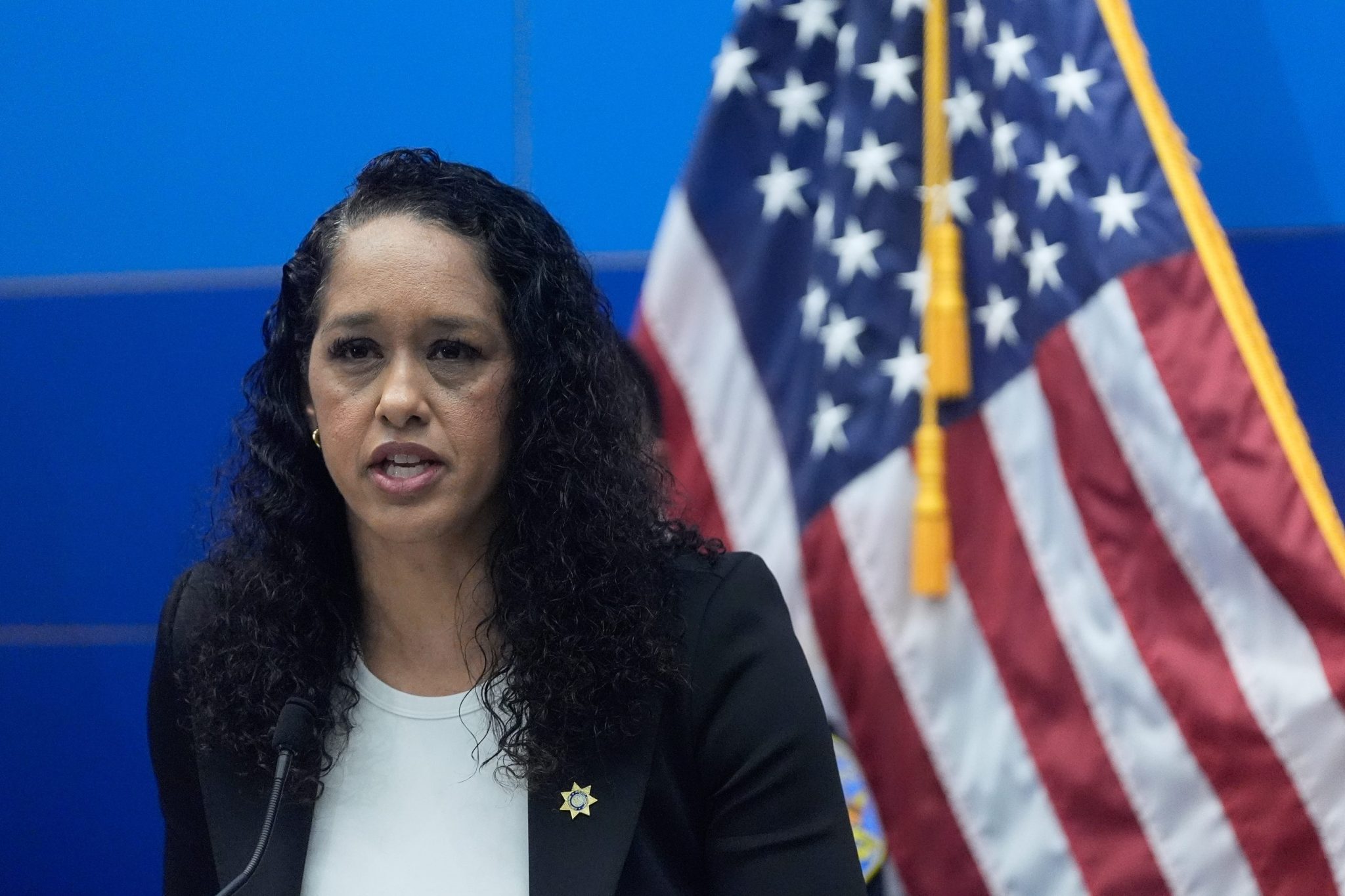
    Moreno-Gama faces charges including two counts of attempted murder and attempted arson in California state court, San Francisco District Attorney Brooke Jenkins. He tried to kill both Altman and a security guard at Altman’s residence, she alleged. He is set to appear in court Tuesday, and online state court records do not yet show if he has an attorney.

    Jenkins said the state charges carry penalties ranging from 19 years to life in prison.

    On Monday morning, FBI agents went to Moreno-Gama’s home in Spring, Texas, a suburb of Houston, where they spent several hours before leaving. He has been charged by federal prosecutors with possession of an unregistered firearm and damage and destruction of property by means of explosives. Those charges carry respective penalties of up to 10 years and 20 years in prison.

    The federal court documents do not list an attorney for Moreno-Gama, and he has not yet had his first appearance in federal court.

    Authorities allege Moreno-Gama traveled from his home in Texas to San Francisco and visited Altman’s home early Friday morning.

    Authorities say Moreno-Gama was opposed to artificial intelligence

    When Moreno-Gama was arrested Friday, officials found a document on him in which he “identified views opposed to Artificial Intelligence (AI) and the executives of various AI companies,” court documents say. The document discussed AI’s purported risk to humanity and “our impending extinction,” according to the criminal complaint.

    Surveillance video images included in the criminal complaint show a person dressed in a dark hoodie and pants that the FBI alleges is Moreno-Gama approaching the driveway of Altman’s home. In various images, the person can be seen tossing the Molotov cocktail, which landed at the top of a metal gate and started a small fire.

    Surveillance video images from outside OpenAI’s headquarters allegedly show Moreno-Gama grabbing a chair and using it to hit a set of glass doors. Authorities said Moreno-Gama was approached by the building’s security personnel, who told investigators he “stated in sum and substance” that he came to the headquarters “to burn it down and kill anyone inside,” according to the complaint.

    San Francisco police arrested Moreno-Gama and recovered “incendiary devices, a jug of kerosene, a blue lighter, and a document.” Moreno-Gama was being held Monday in the San Francisco County Jail on the state charges, and was expected to appear in court on Tuesday.

    U.S. Attorney Craig Missakian said authorities “will treat this as an act of domestic terrorism, and together with our partners, prosecute him to the fullest extent of the law.”

    Authorities say Moreno-Gama’s anti-AI document contained threats against Altman

    The document in which Moreno-Gama discussed his opposition to AI also made threats against Altman, officials said.

    “Also if I am going to advocate for others to kill and commit crimes, then I must lead by example and show that I am fully sincere in my message,” Moreno-Gama is alleged by authorities to have written in the document.

    Advocacy groups that have issued grave warnings about AI’s risks to society condemned the violence.

    Anthony Aguirre, president and CEO of the Future of Life Institute, said in a written statement Friday that “violence and intimidation of any kind have no place in the conversation about the future of AI.”

    Another group, PauseAI, said in a statement that the suspect had no role in the group but joined its forum on the social media platform Discord about two years ago and posted about 34 messages there, none containing explicit calls to violence but one that was flagged as “ambiguous.”

    Discord said Monday that it has banned Moreno-Gama for “off-platform behavior.”

    Altman addressed the threats in a blog post

    Hours after the attack on his house, Altman posted a photo of his husband and their toddler in a blog post addressing the threats against him.

    “Normally we try to be pretty private, but in this case I am sharing a photo in the hopes that it might dissuade the next person from throwing a Molotov cocktail at our house, no matter what they think about me,” Altman wrote.

    He added that “fear and anxiety about AI is justified” but it was important to “de-escalate the rhetoric and tactics and try to have fewer explosions in fewer homes, figuratively and literally.”

    Altman has become a preeminent voice in Silicon Valley on the promise and potential dangers of artificial intelligence. The attack comes days after The New Yorker published an in-depth investigation that touched on concerns some people have about him and the company.

    Debate about the impact of AI is growing

    The attack came at a time of growing debate about the societal effects of AI assistants like OpenAI’s ChatGPT that millions of people are turning to for information, advice, writing help and to do work on their behalf.

    An annual report published Monday by Stanford University called the AI index found that most people believe AI’s benefits outweigh its drawbacks, “but nervousness is growing and trust in institutions to manage the technology remains uneven.”

    ___

    Lozano reported from Houston and Oyekanmi reported from Spring, Texas. Associated Press journalists Matt O’Brien from Providence, Rhode Island and Rebecca Boone from Boise, Idaho contributed.

    [ad_2]

    Source link