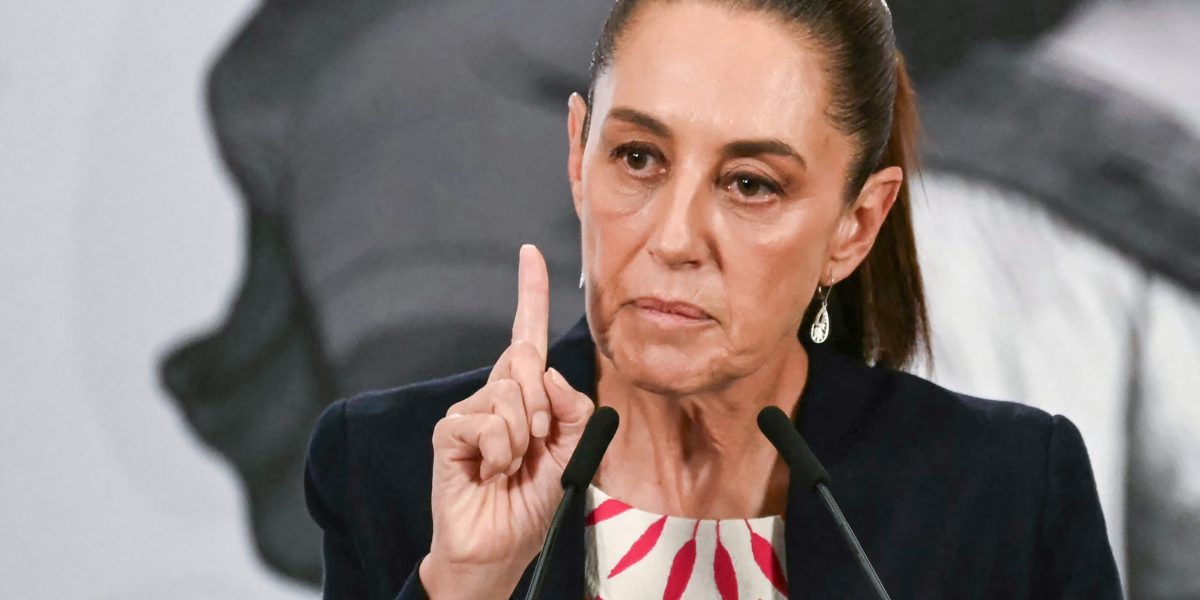
Mexican President Claudia Sheinbaum on Wednesday announced plans to tap into unconventional natural gas deposits in an effort to lower her country’s reliance on foreign energy at a time when the Iran war is disrupting global energy markets.
But Sheinbaum — a scientist and climate expert — notably avoided the term hydraulic fracturing or “fracking,” a drilling method used to extract oil and natural gas from deep underground bedrock using a highly pressurized liquid. Instead, she framed the initiative as a quest for “sustainable” extraction, emphasizing that environmental impacts would be minimized to the greatest extent possible.
The technical feasibility of “sustainable fracking” is a subject of significant debate among environmental scientists and energy experts. But Sheinbaum said a technical committee will spend two months evaluating less harmful methods, such as utilizing nonpotable water and reducing chemical additives. The committee will also assess the potential costs of these mitigations, she said.
“All the gas we import comes from a type of extraction that has environmental impacts” and is “100 meters from the Mexican border,” she noted, alluding to fracking projects in Texas.
While noting that natural gas import contracts with the U.S. remain secure and the bilateral relationship is strong, she argued that increasing energy sovereignty is a responsible necessity. “Is more gas needed? Yes. Can all gas be replaced? Hardly,” she added.
Since assuming power in October 2024, Sheinbaum has pledged to expand renewable energy while maintaining firm support for the state-owned Petróleos Mexicanos. On Wednesday, she defended this stance by arguing that fossil fuels remain an essential component of Mexico’s energy landscape.
Sheinbaum said the priority is to reduce external energy dependence in turbulent times and avoid situations like the one experienced in Europe with the shortage of Russian gas during the war in Ukraine or the one caused by the current war in the Middle East.
Wednesday’s proposal — which is certain to spark controversy — comes amid a surge in infrastructure projects designed to increase U.S. gas imports. These developments aim to satisfy Mexico’s rising domestic electricity demand while positioning the country as a hub for re-exporting gas to Asian and European markets.
The Fortune 500 Innovation Forum will convene Fortune 500 executives, U.S. policy officials, top founders, and thought leaders to help define what’s next for the American economy, Nov. 16-17 in Detroit. Apply here.
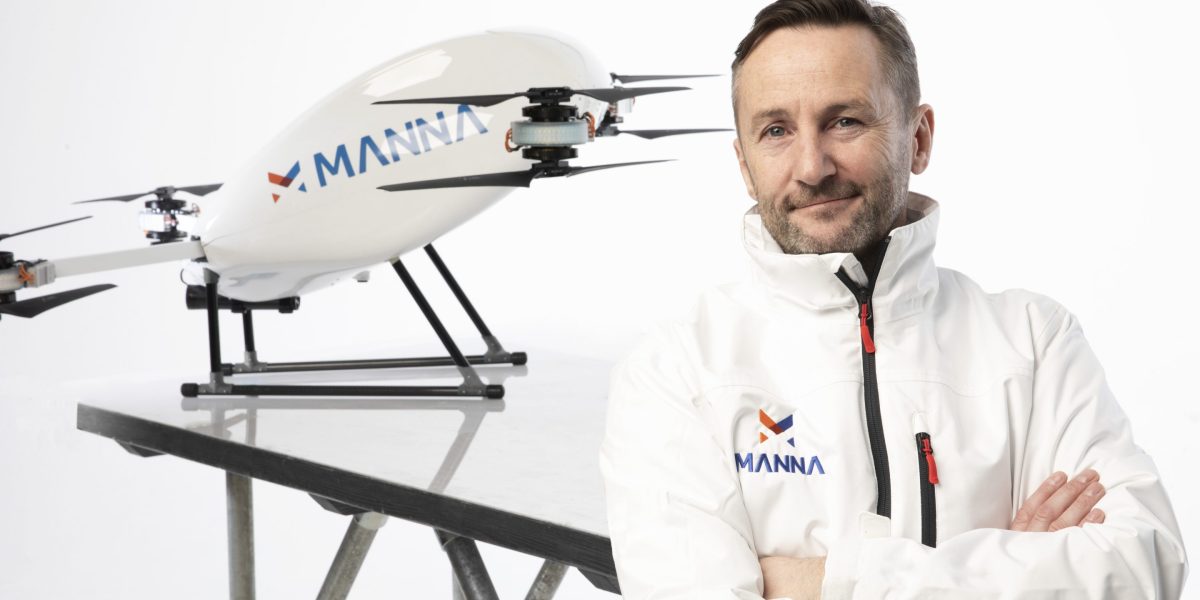
Bobby Healy is at peace with his drone delivery enterprise being unsexy. “Think of us like a low-cost airline,” the Manna CEO told Fortune. That pitch just landed him $50 million.
Manna, the Irish drone delivery startup, closed a Series B this month backed by ARK Invest—Cathie Wood’s firm, known for early investments in OpenAI, Tesla, and SpaceX—along with the Ireland Strategic Investment Fund, Schooner Capital, Coca Cola HBC, and Molten Ventures. The capital will be put towards expanding Manna’s U.S. and European operations. Total funding now sits at $110 million.
Manna, founded in 2018, operates throughout Ireland, as well as Finland and Texas, delivering anything from burritos to biomedical tests. The company has already completed more than 250,000 successful deliveries. It recently announced a new partnership with Uber, and has existing contracts with DoorDash, Deliveroo, and Just Eat.
The problem Manna hopes to solve isn’t ritzy, but the math and market are.
Road-based delivery in the U.S. costs merchants around $10 per order in driver costs alone. Manna does it for cents in electricity. Its drones fly at around 50 to 60 mph in a straight line, deliver in under three minutes, and turn around in under 60 seconds—eight deliveries per aircraft per hour versus the industry average of 1.2.
Meanwhile, the global rapid delivery economy—same-day and on-demand—is projected to grow 21.3% year-over-year for the next decade, reaching $100 billion by 2034, according to Manna. And the last-mile (from hub to final destination) delivery market was worth an estimated $166.45 billion in 2024 and is projected to reach $311.31 billion by 2031, growing at a CAGR of 9.62 percent.
Manna’s U.S. target is 92 million family homes that gig economy delivery has never served profitably. As Healy notes, there are more than a billion food delivery orders placed annually in the U.S., and not enough drivers to move them without bleeding money. “Drones don’t take jobs away,” Healy added. “You’re giving every small business in the suburbs a better logistics platform than Amazon has.”
Recent regulatory unlock, according to Healy, is what’s making VCs move now. The FAA has historically required drone operators to keep their aircraft in direct eyesight at all times, making commercial delivery at scale essentially illegal without a one-off waiver for every single flight. In August 2025, the agency proposed Part 108, a new permanent ruleset that would allow drones to fly beyond what operators can see. The deadline to finalize these rules is mid-2026.
Manna already has plans for 40 to 50 new U.S. locations in the next 12 months, starting in Texas and Oklahoma.
The competitive field has also thinned to four players: Manna, Google’s Wing (750,000+ deliveries, expanding to 150 Walmart stores this year), Zipline ($600M raise, $7.6B valuation, 2 million deliveries globally, but burning more than $60 per order according to a confidential Q4 2025 memo seen by Fortune), and Amazon Prime Air (~16,000 deliveries). Healy notes Amazon only serves its own parcels, leaving Manna, Zipline, and Wing as the three companies competing for what he calls a $300–$400 billion U.S. opportunity. Manna, however, is the only company in the cohort currently turning a profit on every flight.
In the end, Healy says drone delivery is going to be free. “The only losers here are the people selling cars and e-bikes.”
Term Sheet podcast… This week’s guest is Mackenzie Burnett, CEO and cofounder of Ambrook–a modern finance toolkit for farmers. Agriculture is the backbone of the U.S. economy, yet the average American farmer earns only 5 cents of every dollar spent on food. Meanwhile, there’s been an almost 50% spike in bankruptcies of U.S. farms, and margins are thinner than ever due to falling revenues and rising production costs. On the podcast, Burnett breaks down the high-stakes world of agricultural finance, and she and Allie Garfinkle discuss why many farms still rely on paper ledgers, the “unscalable” journey to find product-market fit in a skeptical industry, and how modern financial tools are a critical part of the strategy to save American family farms. Watch the episode here.
Joey Abrams curated the deals section of today’s newsletter.Subscribe here.
VENTURE CAPITAL
– Patlytics, a New York City-based AI platform designed for the patent process, raised $40 million in Series B funding. SignalFire led the round and was joined by N47, Myriad Venture Partners, Relativity, AlumniVentures, AntiportfolioVentures, and BAM Corner Point.
– MOAB, a New York-based operating system for equipment rental and dealership business, raised $16 million in funding across seed and Series A rounds from EladGil, IronspringVentures, and others.
– SoraFuel, a Boston, Mass.-based climate technology company, raised $14.6 million in funding. SperoVentures and InspiredCapital led the round and were joined by EngineVentures and WireframeVentures.
– Livid, a Dover, Del.-based ad-free video hosting platform for creators and small businesses, raised $10 million in funding from GeigeVandentop and DanBriggs.
– GoldenAnalytics, a Seattle, Wash.-based AI-powered business intelligence platform, raised $7 million in seed funding from NEA, Madrona, and Breakers.
– Pomo, a San Francisco-based agentic AI-powered marketing platform, raised $4.5 million in seed funding. KindredVentures led the round and was joined by Databricks, SevenStars, SVAngel, 645Ventures, and angel investors.
– cadootz!, a New York City-based children’s snack brand, raised $3 million in seed funding. SelvaVentures led the round.
– Earlyasset, a Park City, Utah-based developer of financial infrastructure designed to make secondary transactions in venture-backed companies simpler, raised $2 million in pre-seed funding. New Stack Ventures led the round and was joined by CervinVentures and others.
PRIVATE EQUITY
– AeroAccessories & Repair, a portfolio company of ATLPartners, acquired NewGenerationAerospace, a Medley, Fla.-based airplane parts repair company, and Tri-County Aerospace, a Miami, Fla.-based airplane parts repair company. Financial terms were not disclosed.
– AirTransportComponents, backed by AEIndustrialPartners, acquired PASMRO, a Bristow, Okla.-based bearing repair services company. Financial terms were not disclosed.
– Arbiter, a portfolio company of Accel-KKR, acquired VerticalRaise, a Coeur d’Alene, Idaho-based provider of K-12 fundraising solutions. Financial terms were not disclosed.
– FranciscoPartners agreed to acquire BlacklineSafetyCorp., a Calgary, Canada-based safety technology company. Financial terms were not disclosed.
– Harrell-Fish, a portfolio company of NewStateCapital, acquired EcofriendlyMechanical, a Bloomington, Ind.-based mechanical solutions company. Financial terms were not disclosed.
– MissionCriticalGroup, backed by Emerald Lake Capital Management, acquired TxLaSystems, a Huffman, Texas-based electrical switchgear and modular systems. Financial terms were not disclosed.
– MiQ, backed by BridgepointGroup, agreed to acquire RocketLab, a Miami, Fla.-based growth platform for mobile apps. Financial terms were not disclosed.
EXITS
– SteeleSolutions, a portfolio company of RevelarCapital, acquired MaysteelIndustries, an Allenton, Wisc.-based metal products manufacturer, from LittlejohnCapital. Financial terms were not disclosed.
IPOs
– Arxis, a Bloomfield, Ct.-based designer and manufacturer of electrics and mechanical parts for the aerospace and defense industries, plans to raise up to $1.055 billion in an offering of 37.7 million shares priced between $25 and $28. The company posted $1.6 billion in revenue for the year ended Dec. 31. Arcline Investment Management backs the company.
FUNDS + FUNDS OF FUNDS
– 154 Partners, a New York City-based private equity firm, raised $400 million for its first fund focused on companies in the residential, business, and sports & live event services industries.
PEOPLE
– GigascaleCapital, a Palo Alto, Calif.-based venture capital firm, promoted EvalineTsai to partner.
– K8Capital, a New York City-based private credit and venture capital firm, hired Mark Fiorentino as Managing Partner & Head of Venture. Previously, he was with Bain Capital Ventures.
In a world of geopolitical tension, infrastructure vulnerabilities, rising cyber risk and increasingly concentrated global technology supply chains, that question has become even more critical. It goes to the heart of digital sovereignty, which is not only defined by where technology sits, but by who controls it and whether it can be relied upon when it matters most.
Amid global turbulence and the rise of AI, this creates a palpable tension. The instinct is often to build walls. But this fortress mentality is a strategic misstep. Walls can protect, but they also isolate nations and businesses from the global innovation required to remain resilient and competitive.
Global technology, local control
Today, “digital sovereignty” is not about isolation. It is not an “either-or” decision between local and global technology. Nor is it a binary choice between having complete control or accessing the best capabilities. Having true sovereignty means nobody can turn off your critical systems.
Sovereignty is an “and.” Organizations can use many services from other countries while ensuring critical capabilities are controlled locally. Rather than abandoning global technologies, governments and businesses must make choices that preserve autonomy where it matters most: in public services, regulated industries and strategic sectors.
Sovereign by design
This is already playing out in practice. In regions affected by conflict, companies are increasingly relocating data, rerouting networks and operating across more distributed environments. In these conditions, the biggest risk is not system downtime, but disconnection. Systems may remain operational, but nothing can reach them, meaning critical flows and business processes will break down.
Despite severe challenges, resilience, sovereignty and competitiveness are still achievable when organizations meet four critical conditions. The first is using open, hybrid technologies. Lock yourself into one cloud platform and you have a dependency; operate across multiple providers and you have options. Hybrid cloud platforms built on open standards mean companies can switch providers without starting from scratch. This strategy also allows enterprises to benefit from the scale of global platforms while hosting sensitive data in-country to comply with local laws. Hybrid holds data securely and resiliently across environments, from private to public and across borders when needed – helping organizations to maintain continuity during disruption.
The second is software that is sovereign by design. Organizations can now run AI under their own authority, within a defined jurisdiction, with auditable controls – regardless of geopolitical events. This is not a layer that can be taken away; it is a fully air-gapped environment that can operate independently of any global cloud platform when needed.
A third, crucial component of sovereignty is data access that is controlled by the customer, not the cloud provider. “Keep-your-own-key” encryption means providers physically cannot decrypt data without customer permission, under any circumstances.
The fourth pillar is capability investment versus technology consumption. Sovereignty is not about who builds the data centres. It’s about who has the engineers and researchers who can actually deploy the systems, adapt them, and make them work for local needs. Buy the hardware without the capability and you’ve simply imported an expensive black box.
This is not theoretical, our clients are already putting it into practice. In banking, BNP Paribas has built a flexible hybrid architecture that can move workloads between their own data centres and the cloud on demand, to comply with local regulations. Riyadh Air is developing an AI-ready structure that allows them to scale or switch systems without stalling innovation. In Asia-Pacific, companies such as Telkom Indonesia have built an open, interoperable sovereign platform on hybrid architecture to support local businesses. AI needs aligned to local data residency requirements.
Looking ahead
Sovereignty is not exclusive to AI and cloud. The need for resilience extends across every area of technology, from quantum computing and chips to satellites. As enterprises focus on deploying proven tools like AI and automation today, they must also build the research, security posture, and future‑ready infrastructure needed for what comes next, from quantum-safe networks to next-generation compute.
The importance of sovereignty has risen alongside technology’s growing role in national resilience. Governments and businesses face the opportunity of AI productivity gains worth trillions on one hand, and the challenge of maintaining control where it matters on the other. The false perception of sovereignty as a binary choice between progress and independence threatens both pursuits. Enterprises want the upside of global scale alongside the assurances of sovereignty and control. The reality is that with the right design choices, they can have both, ultimately building systems that are sovereign and resilient by design.
The opinions expressed in Fortune.com commentary pieces are solely the views of their authors and do not necessarily reflect the opinions and beliefs of Fortune.
Corporate America has entered the era of the megamanager. For years now, employers have assigned more and more workers per boss in an effort to minimize the cost of managers and accelerate decision-making.
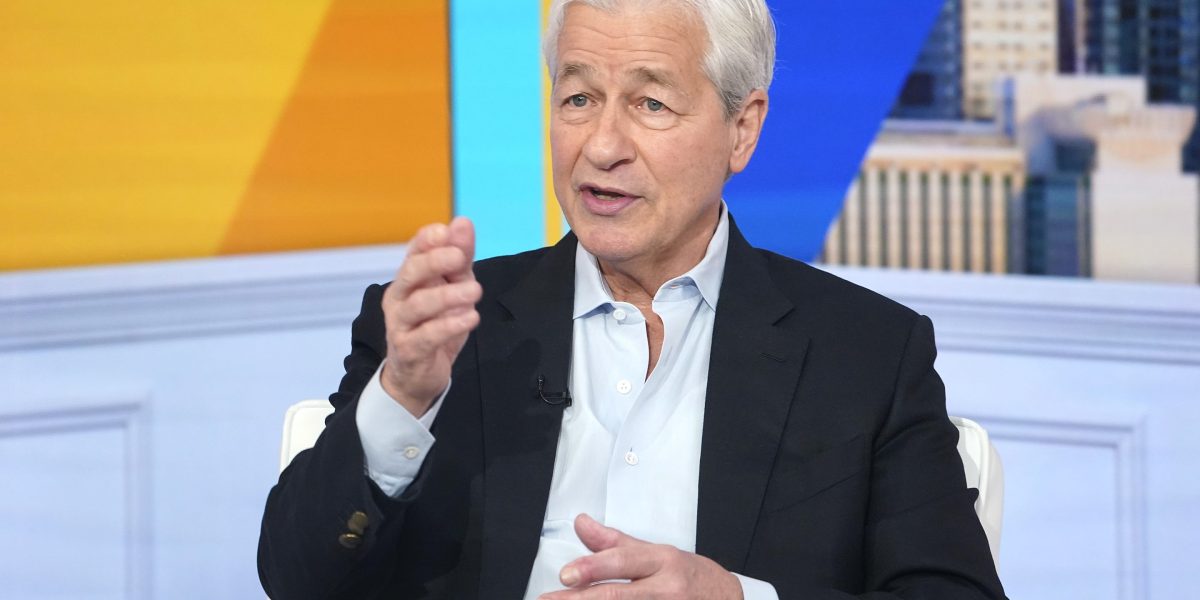
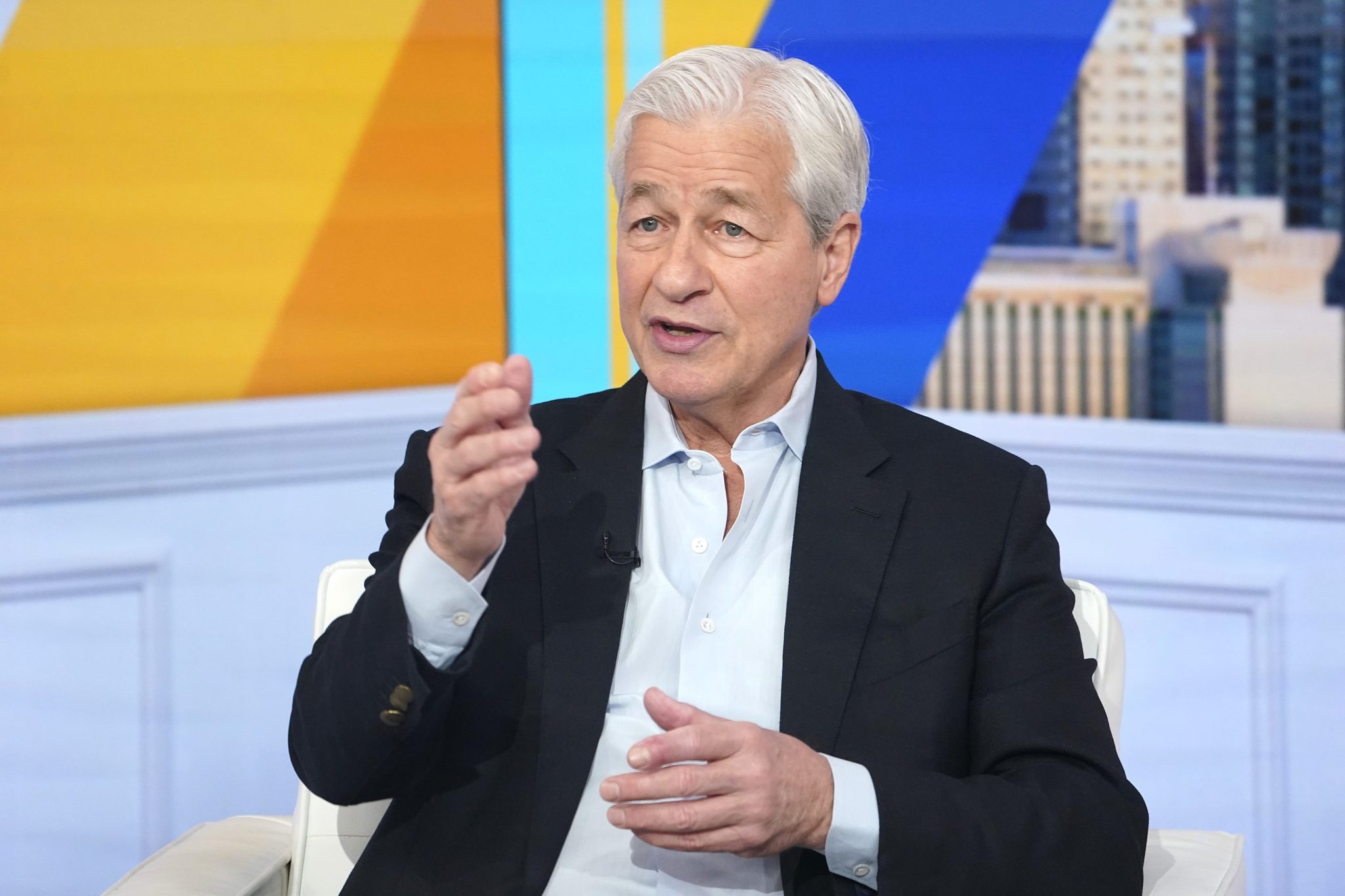
But there’s one titan of industry bucking that trend: JPMorgan Chase CEO Jamie Dimon. In his letter to shareholders, published Monday, the investment bank’s longtime chief executive praised the agility and ownership of small teams in military terms. “The teams needed to tackle [specific problems] should be small and authorized with the decision-making ability to move and act like Navy SEALs or the Army’s Delta Force,” he wrote. “This is trench warfare; it’s about fighting for every inch, moving quickly and getting things done.”
There’s some basis for the comparison with special forces operations: The SEALs are known to work in squads of eight or fewer, for example. And in the business world, organizing workers into smaller teams can ensure that everyone has a stake in the outcome, Dimon argued.
In a team with too many members, accountability is spread too thin, he wrote: “Very often when a management team wants to accomplish something new… everyone on the team says, ‘We’ll get it done,’ meaning they will add it to the long list of tasks already on their plate. But when efforts are 1% of a lot of people’s jobs, it will never get done.”
Smaller teams, with shorter “to do” lists, are incentivized to give their full focus to any given task, he explained: “You need a team 100% dedicated to the mission—and everyone else supports them.”
In championing smaller teams, Dimon is at odds with the ultra-flat management model being adopted by firms like Meta, where CEO Mark Zuckerberg is expecting workers to do more with less in the AI era. The tech giant has laid off hundreds of workers this year and implemented worker-to-manager ratios of 50-to-1 in at least one department—a lopsided organizational structure that’s far beyond even the outer limit of the so-called span‑of‑control scale (which measures how flat or hierarchical a structure is by how many direct reports each manager has).
Eliminating layers of management is intended to speed up decisions and innovation by cutting hierarchy and bringing leaders closer to front-line employees and customers, thereby boosting engagement and ownership. But in such arrangements, junior staff can get overlooked, employees can feel directionless, and managers can burn out—or, as Dimon points out, accountability for getting things done can be diluted.
Despite those risks, U.S. companies are continuing to “flatten,” according to Gallup. The average manager’s span of control grew from 10.9 direct reports in 2024 to 12.1 in 2025, meaning average team sizes are now nearly 50% larger than when Gallup first began tracking them in 2013.
Flat structures often don’t last long, as employees gravitate toward more managerial interaction. “What happens in most organizations is eventually either a formal or an informal structure appears sort of underneath direct reports,” André Spicer, executive dean of Bayes Business School in London and a professor of organizational behavior, previously told Fortune.
The general consensus among management experts is that the ideal team size is seven, give or take a few. Former Amazon CEO Jeff Bezos famously captured this idea by introducing the two-pizza rule in the company’s early days; if two pizzas can’t feed a team, the team is too big.
That illustration seems almost quaint now, but the central concept still holds. Dimon has landed on roughly the same team size, only he made his point—perhaps fittingly in a time of war—with a military metaphor.
The quest to unmask Satoshi Nakamoto, the pseudonymous inventor of Bitcoin, has been going on for more than a decade now, and resulted in some embarrassing misfires. The most notorious came in 2014 when Newsweek magazine dropped a bombshell cover story claiming the Bitcoin inventor was a 64-year-old man named Dorian Nakamoto, hiding in plain sight outside Los Angeles. More recently, a 2024 HBO documentary put forth the dramatic—and dramatically wrong—revelation that Satoshi was a little known and improbably young Canadian software developer.
The latest to take up the case is legendary journalist John Carreyrou, famous for exposing a massive scandal involving fraudster Elizabeth Holmes’ blood-testing startup Theranos. In a lengthy investigation published on Wednesday in the New York Times, Carreyrou claims to have cracked the case and found that Satoshi Nakamoto is none other than British computer scientist Adam Back.
It’s not a bad guess. Back has long been an influential figure in crypto circles, and is also famous as the inventor of Hashcash, a form of digital money that predates Bitcoin. Back is also CEO of an early Bitcoin infrastructure firm known as Blockstream, and is currently operating a company that issues shares to amass a hoard of Bitcoin.
In his exposé, which runs to an eye-glazing 12,000 words, Carreyrou seizes on Back’s business activities and layers on heaps of circumstantial evidence to make the case he has found Satoshi. Carreyrou doesn’t produce any smoking guns, but instead relies heavily on characteristics that are attributable to both Satoshi and Back: the use of British spelling, libertarian beliefs, involvement in the Cypherpunk movement, and the employment of punctuation like “proof-of-work” used in the Bitcoin white paper.
Carreyrou acknowledged an obvious objection to this thesis—that there is a lengthy paper trail of Back corresponding with Satoshi—but explains it away by saying that Back was actually writing to himself as part of an elaborate ruse to throw would-be unmaskers off the trail.
It all sounds good until you recall that journalists, like anyone else, are prone to confirmation bias. This is the psychological phenomenon in which people seek out evidence that confirms their existing beliefs and ignore facts that might refute them. Confirmation bias is what tripped up Newsweek and HBO, and it appears to have tripped up Carreyrou as well.
The evidence he provides about Back’s involvement with the Cypherpunk movement and his political beliefs support his case—but are also attributes common to nearly everyone else in the early Bitcoin days. As for the common literary quirks between Back and Satoshi, Carreyrou himself acknowledges they are not dispositive.
Even as Carreyrou frantically pursues every scrap of information that might confirm his thesis, he is quick to gloss over a better suspect that is right under his nose. That suspect is the reclusive polymath Nick Szabo who ticks all of the same boxes as Back and whose initials are conveniently the inverse of Satoshi Nakamoto. What’s more, you can make the case Szabo is Satoshi without having to explain away mounds of correspondence as an elaborate ruse concocted years after Bitcoin’s invention.
Ironically, Carreyrou does point to a 2015 New York Times article identifying Szabo but quickly dismisses it. He shouldn’t have. The piece is authored by Nathaniel Popper, who not only wrote the definitive early history of Bitcoin culture, Digital Gold, but actually spent considerable time hanging out with all the early crypto figures.
Finally, Carreyrou engages in what looks like another serious instance of confirmation bias. He seizes on specific moments from his encounters with Back where the would-be Bitcoin inventor appears to shuffle and prevaricate in the face of tough questions. Carreyrou accepts this as proof he has his man—but rejects another equally compelling explanation.
Namely, Back—who again denied he is Satoshi on Wednesday—has in the past treated these encounters as an opportunity to play a journalist and put him off the real trail. If Carreyrou had been observant, he might have noticed that Back engaged in the same behavior during the HBO documentary, suddenly putting on a shifty affect during moments when an interviewer thinks he’s found a smoking gun.
There is also the commonsense test. Would the inventor of Bitcoin, knowing that exposing his identity would make him the target of every criminal and tax authority in the world, repeatedly sit down with journalists to discuss the topic? Or would they do their best to fade into the shadows?
The temptation to unmask the inventor of Bitcoin is understandable. It is one of the most delicious mysteries in tech, and one that a series of prestigious media brands have failed to solve. Alas for Carreyrou and the Times, they appear to be the latest in a growing list of big swings-and-misses.
The U.S., Israel, and Iran agreed to a two-week ceasefire on Tuesday, but the sticker shock you’ve been feeling every time you go to the grocery store will get worse if the war continues. One of the first places you’ll feel it will be the produce aisle, experts say.
A Fortune analysis of produce wholesale prices from USDA data found grocery-cart staples such as tomatoes, bananas, and yellow onions have experienced significant price spikes since the war began. The United Nations reported its global food price index rose by 2.4% in March, the second consecutive month of rising prices.
“The big recent changes are the war causing spikes in diesel, fertilizer, and chemical prices,” Jeffrey Dorfman, professor of agricultural and resource economics at North Carolina State University, told Fortune.
USDA predicted food prices will increase by 3.6% in 2026, but soaring fuel prices should lead to an only 1% to 2% increase on produce, Dorfman said.
How fuel prices affect grocery prices
To understand how fuel prices are actually affecting your grocery bill, it’s important to look at how much energy affects food prices. Fossil fuels used to make oil, diesel, and fertilizer used in farming and distribution account for between 15% and 30% of produce costs, Dorfman explained. If fuel prices increase by 30%, as they have since the war began, produce, which accounts for about a fifth of a shopping cart, will increase by just 1% to 2%, Dorfman estimated.
Shipping costs are also a key factor in price increases. This time of year, most produce in the U.S. comes from Florida, Arizona, California, and Mexico, Dorfman said. If you live farther from these places, and food has to travel longer, you will see more of an effect on prices, he noted.
Other factors impacting grocery prices
Fuel prices are not the whole story.
Grocery prices were facing upward pressure even before the war in Iran, Dorfman said. A growing labor shortage owing to limited immigration, drought, and overall inflation have all led to price increases, he said.
Labor, which contributes to about half of the cost of groceries, was the single biggest contributor to higher prices before the war, Chris Barrett, professor of applied economics and management at Cornell University, who studies international agriculture, told Fortune.
“Labor shortages have been a very real feature of the food value chain over the last 14 months, and that means that they’re having to pay more for overtime,” he said. “They’re having to pay more to get or to keep workers because they’re losing workers as people have been detained or deported.”
In October, the Department of Labor filed a report with the Federal Register, estimating that 42% of the U.S. crop workforce is unable to enter the country, faces potential deportation, or is leaving the U.S.
Another key factor is electricity prices beyond fuel and diesel, Barrett said.
“Energy is also embedded in your grocery bill,” he said. “Just think of all the refrigerated trucks you see moving fruits and vegetables and dairy products around. Think of all the refrigeration and freezers in the grocery store. Think of all the electricity running the machinery that does the processing and the packaging.
“All of those higher electricity costs turn into an added expense on your grocery store bill, and that was already an issue before the war,” he continued.
Tariffs also raised produce prices before the war, Barrett said.
“Tariffs are a tax right on the top,” he said. “The importer is paying a duty to the government to import tomatoes from Mexico, or to import broccoli from Chile, during our winter. That passes straight through to you and me at the grocery store checkout.”
What to expect over the next few months
Grocery prices could get much higher if the war continues, Dorfman said.
“It’s not like we can’t ship the oil now, but we’ll catch up once this is over. You can return to normal amounts of oil being shipped, but you can never really catch up,” Dorfman said. “I certainly can’t predict how long the war is going to last, but the longer it lasts, the longer oil prices will stay high, and the slower they will be in returning to normal.”
While the current effects of the war on grocery prices may be mild, customers could feel the pain for the rest of the year if the war continues another two or three months, Dorfman said. This is, in part, because most crops only grow once a year. Therefore, if farmers use higher-cost fertilizer to grow products like corn this spring and summer, it could affect prices until the next growing season.
If the war does not last much longer, food prices may not go up, Peter Zaleski, an economics professor at Villanova University, told Fortune. While crop prices tend to be volatile, other foods may not change in the short term.
“Even especially at the retail level, firms are loath to raise prices,” Zaleski said. “They’re probably in a wait-and-see mode to see for certain,” especially when it comes to factory-processed food. Other manufacturers may respond with shrinkflation, or offering a smaller amount of product for the same price, he said.
A slew of Bitcoin ETFs have hit the market since the products were first approved in the U.S. in 2024, but so far one sector has remained on the sidelines—major U.S. banks. That changed Wednesday with the launch of MSBT, a Bitcoin ETF offered by Morgan Stanley.
The spot ETF, which features an industry low with a sponsor fee of 0.14%, saw over $25 million in trading volume in its first half day of trading. In an X post, Bloomberg senior ETF Analyst Eric Balchunas put MSBT’s debut in the top 1% of all ETF launches.
The bank’s crypto plans don’t end with Bitcoin, either. Morgan Stanley also filed for Ethereum and Solana trusts in January.
Bitcoin ETFs currently hold over $100 billion in cumulative assets under management as of Tuesday, according to data from CoinShares. The largest Bitcoin ETF belongs to BlackRock, which has over $53 billion in net assets in its IBIT fund.
Bitcoin’s newest ETF arrives at a time when investor interest in crypto, and risky assets in general, is relatively muted. Demand for Bitcoin ETFs recovered slightly after posting a sluggish start to 2026, and the funds have cumulatively seen over $1 billion in net inflows on the year, according to data from CoinShares.
Morgan Stanley’s wealth management arm, which has about 16,000 advisors, has recommended clients allocate 2% to 4% of their portfolios to crypto. The bank’s clients were previously able to access third-party Bitcoin ETFs. Now, Morgan Stanley will be able to direct clients to its own product.
For crypto boosters, MSBT’s launch was yet more confirmation of crypto’s relevance to the financial sector.
“Institutional priorities have matured; MSBT is the clear response to this second wave of digital asset adoption,” Coinbase Institutional co-CEO Brett Tejpaul told Fortune. Coinbase and BNY Mellon were both selected as custodians for the ETF.
But it’s yet unclear if Morgan Stanley breaking the ice on bank-led crypto ETFs will open a floodgate of new crypto funds. Despite the fact that the “risk of being first is gone,” CoinShares senior research associate Luke Nolan said in a text, “banks with strong anti-crypto reputations are unlikely to follow quickly … I [don’t] think Goldman [will] join the ETF game, for example. They seem to be going more for the tokenization side of things (although this could prove incorrect).”
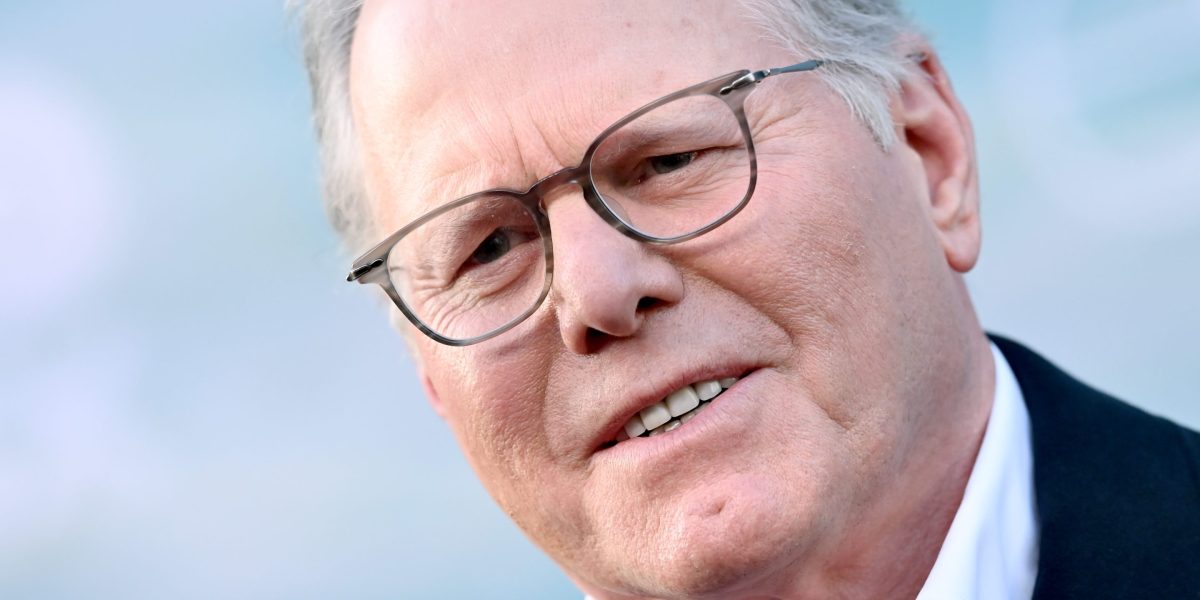
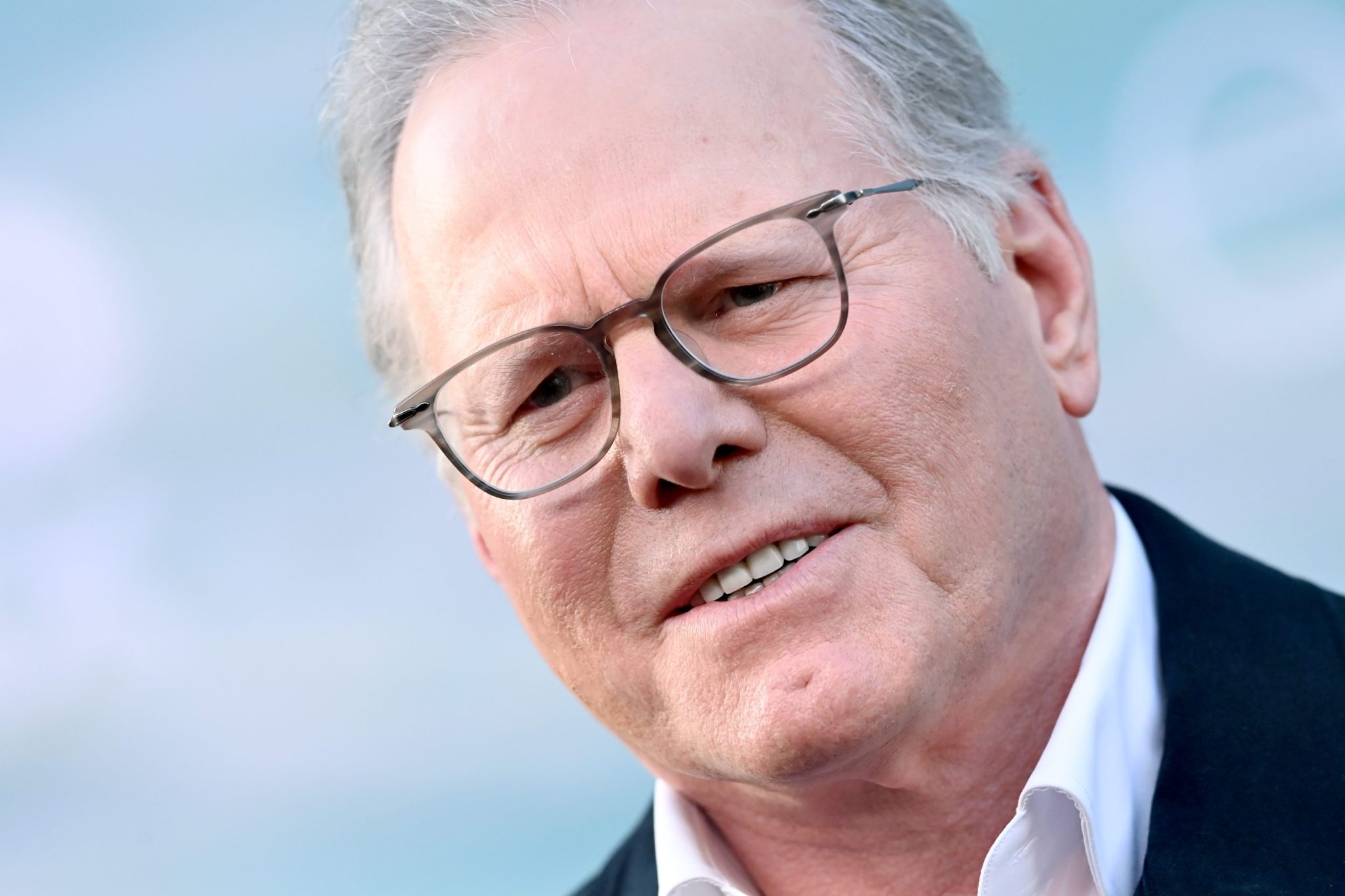
An advisory firm that counsels the largest institutional investors on how to vote at shareholder meetings is recommending investors support Warner Bros. Discovery’s $77.7 billion acquisition by Paramount Skydance but is against a golden-parachute proposal that would see executives collect a total of $1.35 billion after the deal goes through.
In a report issued on Wednesday, Institutional Shareholder Services (ISS) said support for the “extraordinary golden parachute” proposal, which it valued at $886.8 million in payments for Warner Bros. CEO David Zaslav and $466.2 million for the other executives, wasn’t warranted. ISS took issue with an “excise tax grossup” estimate of $335 million for Zaslav and hundreds of millions he stands to collect just because the deal between the two companies is happening.
It’s unclear if Zaslav will have a future role at the combined entity or with one of its affiliates or if he will continue on in a senior role. When Warner Bros. was weighing rival offers from David Ellison’s Paramount Skydance and Netflix last year, Ellison and his father, Oracle co-founder Larry Ellison, dangled a compensation package worth “several hundred million dollars” to Zaslav, according to the deal disclosures. David Ellison also floated Zaslav becoming chairman of the combined company’s board, and then upped it to a co-CEO and co-chairman title.
As of Warner Bros. proxy report filed last month, none of the executive officers have made an employment deal with Paramount, the combined company, or any of its affiliates. If Zaslav stepped into a chairman or CEO role, his golden parachute pay wouldn’t be consolation for losing a job, as is common, since he would be moving into another role at the combined company.
“The value disclosed in the golden parachute table for CEO Zaslav at over $886 million represents one of the highest golden parachute estimates ever observed, though the proxy notes that this value may decline depending on merger timing,” ISS wrote in its report to investors.
The proxy advisory firm said it had “significant concerns” about the $335 million agreement to cover an excise tax Zaslav will incur as a result of the acquisition, describing the so-called grossup agreement as “an extraordinary cost” inconsistent with common market practice. An excise tax gross-up payment from a company to an executive is rare. The payments cover a 20% additional tax burden triggered by the IRS when an executive collects more than three times their average total compensation. The excise gross-up payment gives the executive enough additional cash so that they’re left as if the excise tax never hit them. The other Warner Bros. executives are not getting an excise tax, ISS noted.
In addition to the special tax treatment for Zaslav, ISS found that the overall parachute payment for him is mostly the result of what are called single-trigger benefits. A single-trigger on an executive’s stock-based equity compensation means that the equity qualifies for accelerated vesting based on one event, which is usually when a company’s ownership changes. Most large-cap companies have double-trigger vesting, meaning there needs to be both a change-in-control of the company and that the executive loses their job. The awards for executives other than Zaslav are subject to double-trigger vesting, but most of Zaslav’s outstanding equity will just automatically accelerate based on the acquisition, ISS wrote.
That includes awards the Warner Bros. board gave Zaslav in January, including more than 3 million stock options and 2 million restricted stock units that ISS valued at a total of $107 million, although the options could potentially be worth less. ISS’s report states that more than 94% of the value of Zaslav’s $887 million in payments was because of the tax gross-up payment and equity that will automatically accelerate just because of the deal.
Warner Bros. disclosed that if the deal were to take place in 2027, no excise tax payment would happen for Zaslav. However, Paramount Skydance and Warner Bros. are working to complete the merger as soon as possible and expect it to close by the end of the third quarter of 2026 in September.
Warner Bros shareholders will vote on the Paramount acquisition and on executives’ golden parachute payouts on April 23, though votes on the payouts are purely advisory and non-binding.
Warner Bros. did not respond to a request for comment on ISS’s recommendation.
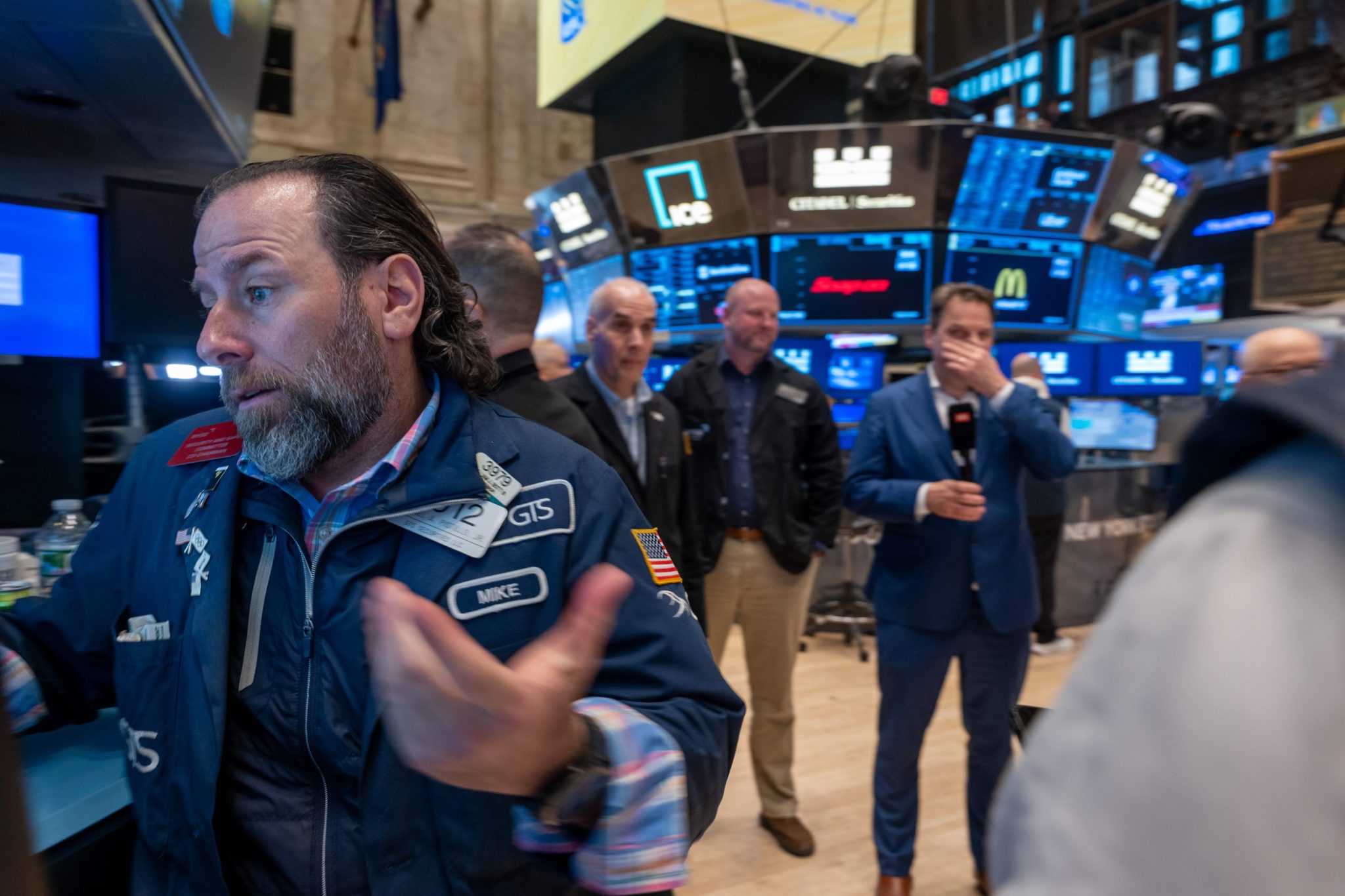
President Donald Trump again stepped back from the brink, and traders are cashing in on what they called “TACO Tuesday.”
After threatening that “a whole civilization will die tonight” early Tuesday, just two hours before his 8 p.m. deadline, Trump announced a two-week ceasefire on the condition that Iran reopen the Strait of Hormuz and restart the flow of oil. While doubts remain about the agreement and whether oil flows will actually restart, the president’s about-face still managed to lift markets.
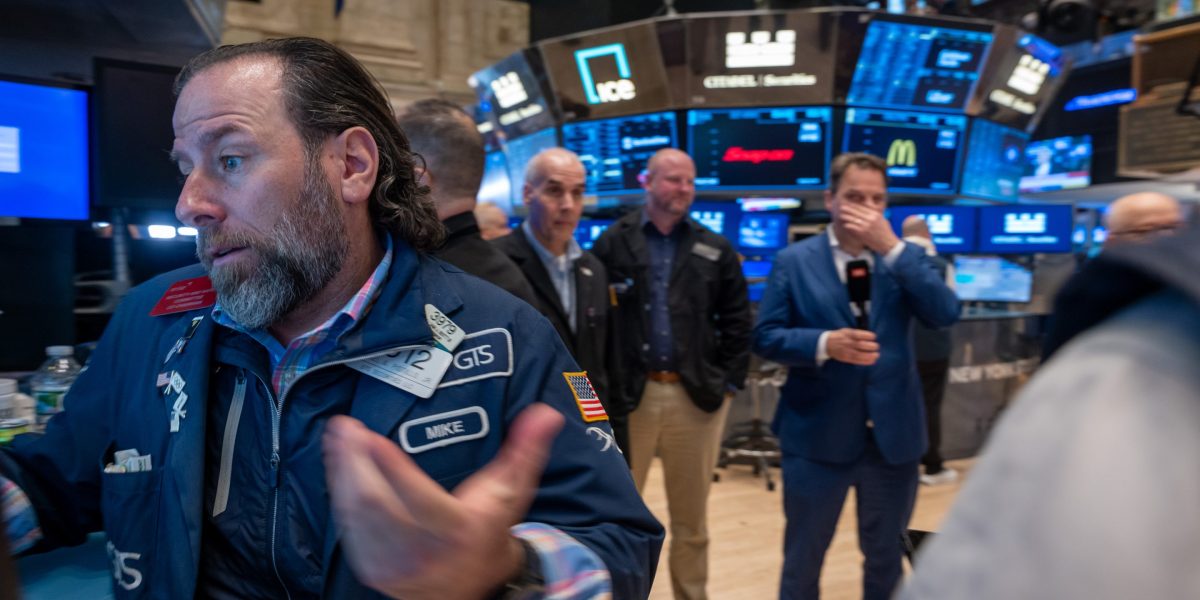
A $1.5 trillion rally lifted all three major indexes and brought some optimism to markets following weeks of uncertainty over Middle East turmoil. Oil fell by 16% to below $100 per barrel while equities surged. The Nasdaq led gains with a 3.55% jump, followed by a 2.7% increase for the S&P 500, and a 1,200 point, or 2.6% bump, in the Dow Jones industrial average. The surge reversed weeks of losses—the S&P 500 earlier this week was down 4% since the Iran war started in late February.
Online, traders rejoiced as the reliable TACO trade, shorthand for “Trump always chickens out,” panned out once again.
“Knowing Trump will [TACO] is the equivalent of me knowing I need to drink water to survive,” wrote one commenter on the trading-focused Reddit forum SmallStreetBets.
Financial analysts tend to agree with the retail traders—with some caveats.
“This could be a boom for tech stocks now with this off-ramp in Iran,” Wedbush analyst Dan Ives told Fortune.
Ives went further in a Wednesday note, saying more than one month of Iran turmoil has created opportunities for traders to benefit.
“We continue to strongly believe the nervous geopolitical backdrop over the past few months has created an oversold tech environment for Mag 7, software names, and many tech winners in the AI revolution,” Ives wrote.
What is the TACO trade?
The TACO trade was born last year when Trump switched course after announcing broad “Liberation Day” tariffs on nearly all U.S. trading partners. At the time, the S&P 500 plunged nearly 20% before rebounding sharply after Trump paused them. Retail investors, in particular, capitalized on the so-called TACO trade following the Liberation Day tariffs, putting a record $3 billion into equities as the S&P 500 sank 5%.
Still, others cautioned that while the TACO trade is alive and well now, that doesn’t mean it will always deliver.
“Investors are noticing the pattern, and may they extrapolate that pattern into the future. I think that’s reasonable, but we would caution not to over extrapolate that,” Michael Reynolds, vice president of investment strategy at Glenmede Investment Management, told Fortune.
Reynolds added that while the trade has been consistent for now, investors should not be confident it’s foolproof.
“We would caution that if investors were to completely see through all of those statements, they may be setting themselves up for a nasty surprise in a situation where there is a follow through,” he said.
Iran’s parliamentary speaker, Mohammad Bagher Ghalibaf, said Wednesday that three clauses of the 10-point ceasefire framework with the United States had already been violated, despite negotiations not beginning.
Ghalibaf cited continued Israeli strikes in Lebanon; a drone shot down over Iran’s Fars province; and what Tehran called a denial of its right to uranium enrichment. “In such situation, a bilateral ceasefire or negotiations is unreasonable,” he wrote in a statement posted to X. The Strait of Hormuz remained largely blocked, with only four tanker transits recorded on the day, according to S&P Global Market Intelligence.
Markets barely flinched on the news, with crude ticking up slightly higher and stocks falling only 0.3%. Crude has posted one of its sharpest single-day drops on record, and global equities have ripped higher on peace-deal euphoria.
The statement throws immediate uncertainty over a deal that is barely 24 hours old and exposes a fundamental disagreement over what was actually agreed to. The U.S. and Iran are heading into talks in Islamabad, Pakistan, on Saturday working to Frankenstein some agreement between two different documents: Iran’s 10-point plan and the White House’s 15-point plan. White House press secretary Karoline Leavitt said Wednesday there was no way President Trump would accept Iran’s version, which demands Tehran retain control over the Strait of Hormuz and receive reparations for the war.
Trump moved Wednesday to dismiss the idea that any framework other than his own was on the table. In a post on Truth Social, he wrote: “Numerous Agreements, Lists, and Letters are being sent out by people that have absolutely nothing to do with the U.S.A./Iran Negotiation, in many cases, they are total Fraudsters, Charlatans, and WORSE.” It was unclear whether Trump was referring to Ghalibaf’s statement; to an earlier letter reported by CNN that the White House said carried no official authority; or to both.
Lebanon becomes the flash point
The single biggest point of contention, and now the most violent, is Lebanon.
Israel’s military said Wednesday it had struck more than 100 Hezbollah command centers and military sites in 10 minutes, in what it called the largest wave of strikes in the conflict. The southern suburbs of Beirut, southern Lebanon, and the eastern Bekaa Valley were all targeted. Lebanon’s health ministry said at least 112 people were killed and 837 injured while the country’s civil defense put the toll higher, at 254 dead and more than 1,100 wounded. Hospitals are overwhelmed in Beirut, while rescue crews reported people trapped under the rubble of collapsed buildings.
The strikes came hours after Israeli Prime Minister Benjamin Netanyahu’s office publicly denied Pakistan’s assertion—which Islamabad had used as a basis for mediating the U.S.-Iran ceasefire—that the deal also covered the Lebanese front.
Iran had drawn its line directly on this question. Foreign Minister Abbas Araghchi said Wednesday the ceasefire with the U.S. must include a pause in Israel’s conflict with Hezbollah. “The Iran-U.S. Ceasefire terms are clear and explicit: the U.S. must choose—ceasefire or continued war via Israel. It cannot have both,” Araghchi wrote on X. “The world sees the massacres in Lebanon. The ball is in the U.S. court.”
The White House sees it differently. “Lebanon is not part of the ceasefire. That has been relayed to all parties in the ceasefire,” Leavitt told reporters.
Hezbollah, which has not claimed any attack since the ceasefire was announced, said Wednesday that the group was on the “threshold of a major historic victory” and warned displaced families to wait for a formal ceasefire announcement before trying to return home. Israeli military spokesman Effie Defrin said Israel would respect the ceasefire with Iran but warned: “If we need to go back and attack Iran, we will.”
The Fortune 500 Innovation Forum will convene Fortune 500 executives, U.S. policy officials, top founders, and thought leaders to help define what’s next for the American economy, Nov. 16-17 in Detroit. Apply here.