Blog

  • Goldman looked at 40 years of the ‘scarring’ effects of tech and finds Gen Z isn’t the most at risk

    Goldman looked at 40 years of the ‘scarring’ effects of tech and finds Gen Z isn’t the most at risk

    [ad_1]

    Wall Street’s most-watched economics team has a warning for workers displaced by AI: The damage could last for years. But in a surprising twist, the people most expected to bear the brunt of the coming disruption—recent college graduates—may actually be the best equipped to weather it.

    In a research note published Monday, Goldman Sachs economists Pierfrancesco Mei and Jessica Rindels drew on four decades of individual-level data to assess what they call the “scarring” effects of technological displacement on U.S. workers. Their verdict is sobering. Workers whose jobs are eliminated by technology don’t just struggle in the short term—they can spend the better part of a decade fighting to recover.

    “Over the 10 years following a job loss, real earnings for technology-displaced workers grow nearly 10 percentage points less than for never-displaced workers,” the report found, “and 5 percentage points less than for other displaced workers.”

    The research team tracked more than 20,000 individuals across two cohorts—one born in the 1950s and ’60s, and another in the 1980s—using the National Longitudinal Surveys sponsored by the Bureau of Labor Statistics. By identifying which occupations faced the steepest technology-driven employment declines in each decade since 1980, they were able to map the full career arcs of workers caught in automation’s path.

    The immediate pain is real

    The short-run picture is rough. Workers displaced from technology-disrupted occupations take approximately one month longer to find a new job and suffer real earnings losses more than 3% larger upon reemployment compared with workers let go from more stable fields. The core culprit, Goldman found, is occupational downgrading: Displaced workers tend to slide into roles that are more routine and require fewer analytical and interpersonal skills, not less, because the same technological forces that eliminated their old jobs also eroded the market value of their existing skills.
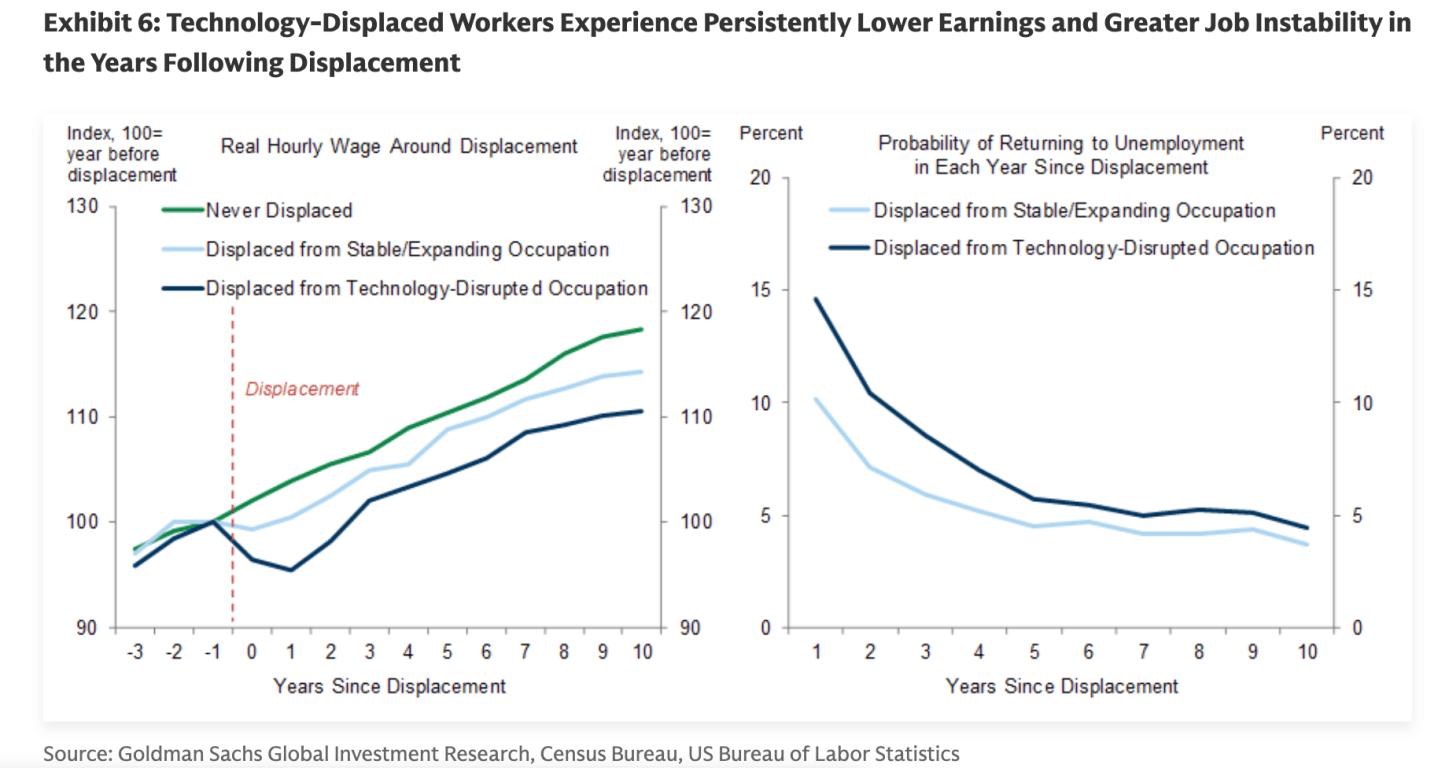
    The scarring doesn’t stop at paychecks. Goldman found that workers displaced early in their careers—between ages 25 and 35—accumulate less wealth over time, largely because they delay buying homes. They’re also less likely to be married at any given age compared with never-displaced peers, suggesting the economic shock ripples into their personal lives as well.

    Recessions make everything worse

    Goldman’s most urgent warning may be about timing. Firms disproportionately shed routine jobs during economic downturns, when efficiency pressure peaks. For workers, a recession-era technology displacement widens the already painful gap versus other displaced workers by roughly three additional weeks of unemployment and five percentage points each for the risk of returning to unemployment and exiting the labor force entirely. With AI adoption accelerating at a moment of unusual macroeconomic uncertainty, that compounding risk is hard to ignore.

    The Gen Z twist

    Here’s where the report defies the prevailing narrative. Much of the public anxiety about AI-driven job losses has centered on young workers—particularly new graduates entering a market increasingly shaped by automation. Goldman’s data tells a different story. Younger, college-educated, and urban workers experience cumulative earnings losses roughly half as large as other technology-displaced workers over the decade following a job loss. Their advantage comes from flexibility: They switch occupations more readily and migrate up the skills ladder into roles with higher analytical content that complement, rather than compete with, new technology.

    “Contrary to current concerns that the costs of AI will fall especially hard on new graduates,” the report states, “younger workers have actually been able to adjust more flexibly through occupational mobility and skill upgrading in the past.”

    Retraining also helps cushion the blow. Workers who participated in vocational or technical programs within three years of displacement saw roughly two percentage points more cumulative wage growth over the following decade and a 10-percentage-point lower probability of returning to unemployment.

    Goldman has been estimating for several years that AI could displace 6% to 7% of U.S. workers over the next decade. This 40-year sweep of data suggests the workers who should be most worried aren’t the youngest ones in the room—they’re the older, less mobile workers with deeply occupation-specific skills and no recession-proof timing on their side.

    For this story, Fortune journalists used generative AI as a research tool. An editor verified the accuracy of the information before publishing.

    [ad_2]

    Source link

  • A $400 million ballroom was just the beginning. Now, Trump plans to spend $174 million more

    A $400 million ballroom was just the beginning. Now, Trump plans to spend $174 million more

    [ad_1]

    Last October, the scene of demolition crews using a backhoe to tear down the East Wing of the White House was so dramatic that it became an impromptu tourist attraction. President Donald Trump, who considers himself to be “builder-in-chief,” isn’t done yet. 

    The White House will spend $377 million for renovations and repairs for the presidential residence this year, according to the president’s budget released on Friday. And that’s not even all of it—it’s estimating another $174 million for fiscal year 2027. This would be an 866% increase from the estimated $39 million spent on White House repairs during fiscal year 2025. 

    The money mostly comes from donors, an Office of Management and Budget official told Fortune

    In October, the White House released a list of 37 donors who are funding the East Wing renovations, including Big Tech companies such as Meta Platforms, Apple, Google, and Amazon. There were also a number of individual or family donors, including the Adelson Family Foundation, Secretary of Commerce Howard Lutnick’s family, Blackstone CEO Stephen A. Schwarzman, and cryptocurrency billionaires Cameron and Tyler Winklevoss. 

    The budget does not specify what projects the funding will go toward, but an Office of Management and Budget official told Fortune that the money will cover all repair, renovation, construction, and security costs. These figures represent money already in the government accounts, not a request from Congress for more funding, the official said—an important distinction as many other parts of this budget, such as the record-breaking ask of $1.5 trillion in military spending for next year, are new requests for Congress to approve.

    In a January filing as part of a lawsuit against the National Park Service brought by the National Trust for Historic Preservation, White House Management and Administration Director Joshua Fischer wrote that there are plans to fix water infiltration, update old electrical infrastructure, comply with the Americans with Disabilities Act, and remove asbestos and lead-based paint. “Donated funds received by NPS pursuant to NPS’s gift authority are being transferred to the White House Repair and Restoration Account pursuant to the Economy Act,” Fischer wrote in the filing, “to fund this project and supplement the Executive Mansion’s annual allowance appropriated,” which is $2 million for fiscal year 2026, and $6 million in 2027.

    Last year, Trump replaced the Rose Garden lawn—a space that has been used for decades for bill signings, press conferences, and formal dinners—with a stone patio for events. He dubbed the renovated space the “Rose Garden Club,” a space “for senators, for congresspeople and for people in Washington, and frankly, people that can bring peace and success to our country,” Trump said at an event in September. 

    He had also planned to host tech executives in the space in September, many of whom run companies that later donated to the ballroom project, but the event was moved inside due to the weather.  

    Some $350 million of the estimated $377 million is considered mandatory spending, a designation used for programs Congress funds by statute, such as Medicare and Social Security, rather than yearly appropriation. The private, tax-deductible donations were placed in the National Park Service gift account, which is a mandatory account, according to the OMB official, and not subject to yearly congressional appropriations. 

    The ballroom is the most prominent project that has been announced. Trump repeatedly said that taxpayers will not foot the $400 million bill for the 90,000-square-foot ballroom renovation. When the plan for the ballroom was announced in July, the president said it would cost half the price. 

    “I am honored to be the first President to finally get this much-needed project, which is on time and under budget, underway,” Trump said on social media on April 2. “When completed, it will be the Greatest and Most Beautiful Ballroom of its kind anywhere in the World, and a fabulous complement to our Beautiful and Storied White House!”

    [ad_2]

    Source link

  • ‘No one’s raising their hand’: Japan’s labor crisis shows robots are taking jobs you don’t want

    ‘No one’s raising their hand’: Japan’s labor crisis shows robots are taking jobs you don’t want

    [ad_1]

    Japan is running out of workers. Its population declined for a 14th straight year in 2024; its working-age population is projected to shrink by nearly 15 million over the next two decades; and a 2024 Reuters/Nikkei survey found that labor shortages are the primary force pushing Japanese firms toward automation and AI adoption.

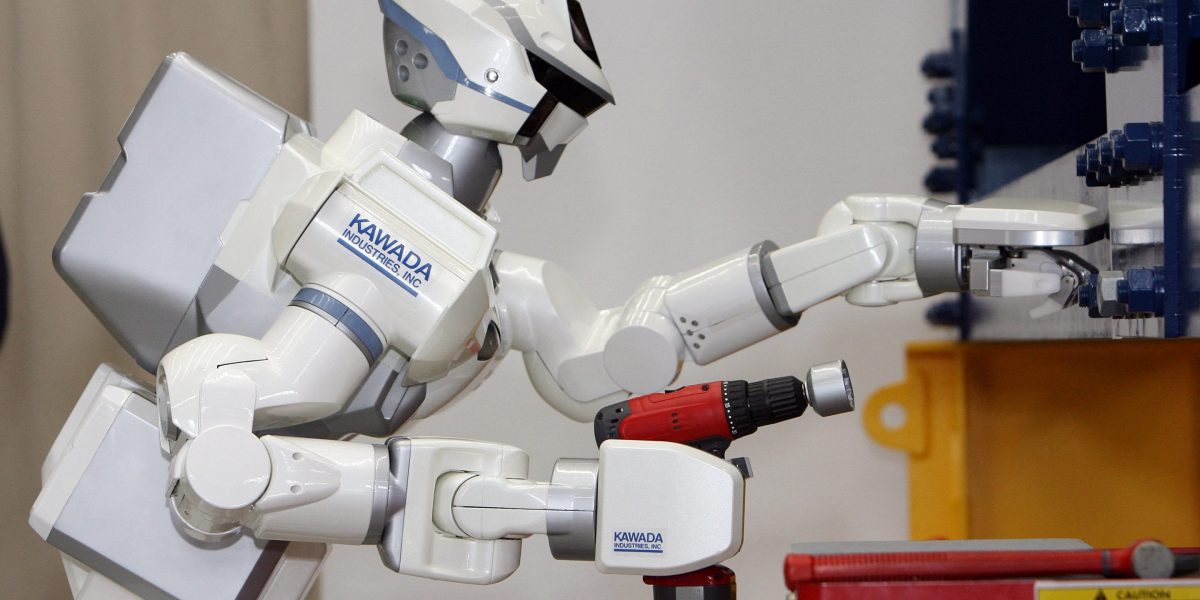
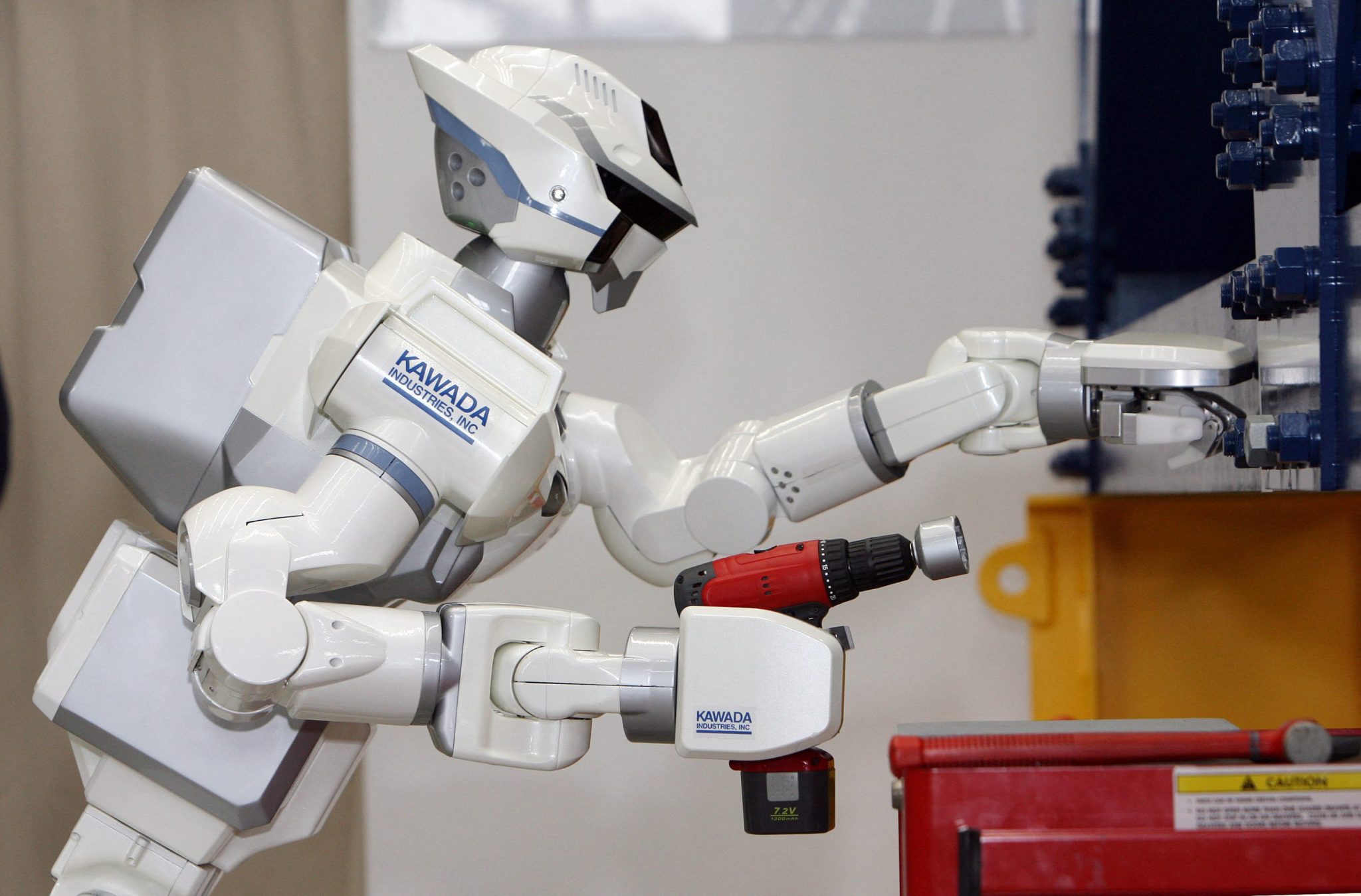
    Last month, the Ministry of Economy, Trade, and Industry said it was looking to build a domestic physical AI sector, with hopes of holding 30% of the global market by 2040. The idea is to employ robots in logistics warehouses, on factory floors, and inside data centers—where they’re not taking people’s jobs, but filling the ones no one wants. 

    Ally Warson, a partner at UP.Partners, a venture firm focused on transportation tech and the physical world, has been telling investors this for years. Japan’s labor shortage is one prime example of where it’s becoming evident.

    That’s all the more accentuated in fields where there’s a large demand for labor and few people to fill those roles. For example, Japan is looking to employ robots to take care of its aging population in home health scenarios and in other domestic sectors. 

    In fact, they’ll become so ubiquitous that a recent Bank of America report predicted people will soon own more humanoid robots than cars by 2060.

    “The reality is, no one wants to do these jobs,” Warson told Fortune. For example, “there are something like 600,000 unfilled jobs in the industrial space. No one’s raising their hand and signing up for it.”

    Robots are building walls

    The UBS Global Entrepreneur Report 2026, which surveyed 215 business leaders at companies with a combined $34.3 billion in revenue, found that 47% of entrepreneurs with industrial businesses see automation and robotics as the biggest commercial opportunity.

    The UBS researchers spoke with the head of a Luxembourg construction and property firm who drew a distinction between AI and the physical potential of robotics. “In the construction industry, AI has limited uses. This is a physical business, and AI can’t build a wall. There’ll be robots at some point in time, but not yet,” the firm’s leader told UBS researchers. 

    Warson agrees. Although robots are not there yet, she said, there are plenty of jobs where the risk to a person’s life makes it a prime target for robotics automation. In tunnel construction, “you can just have a robot keep boring” instead of possibly subjecting a manned crew to hazardous conditions. Or something as visible as window-washing: “Even hanging someone off the side of a building hundreds of feet in the air to window-wash. Why is this still a thing?”

    For Warson, the most compelling case for physical AI has never been efficiency or cost-cutting. Rather, it’s keeping people alive.

    “I think the economics works the most for jobs where human lives are at risk,” she said. “If you’re talking about replacing a person who’s walking through a construction site at midnight, where there are nails sticking out of the ground, or you’re asking someone to go to an offshore oil and gas site because there’s a leak, that’s a million-dollar-plus life insurance claim on top of any sort of lawsuits.”

    Preparing for a robotic future

    UP.Partners has put real money behind these ideas. The firm backed Noble Machines, a construction robotics company engineered specifically for the chaos of real job sites. The robots are capable of navigating stairs, stabilizing under pressure, and operating in unstructured environments that earlier industrial robots couldn’t handle. It also invested in WakeCap, a hardware-software platform that monitors construction workers and has seen a 91% drop in safety observations. 

    “WakeCap is helping humans be safer on construction sites,” Warson said, describing the company’s sensors that are built into hard hats and track real-time activity. “That goes back to insurance. You could even take the lens of, AI is helping humans be safer, in a lot of different provocative ways.”

    Combining AI with robotics is the fastest surefire way to achieve real, tangible results. This is reiterated by Japan’s $6.3 billion investment in robotics under Prime Minister Sanae Takaichi, according to a report by Franklin Templeton.

    According to its economy ministry, the country already controls about 70% of the global industrial robotics market, and looks to accomplish even more by its 2040 deadline by adding AI to the mix. 

    But none of this means the robot apocalypse is imminent. Warson said the underlying infrastructure for physical AI has finally caught up with real-life use cases. Internet-connected sensors are now ubiquitous on job sites. Compute is powerful enough to run sophisticated models at the edge. And AI models are giving machines the ability to generalize across physical environments in ways that would have been unthinkable five years ago. “AI has unlocked the potential for robotics as an asset class,” Warson said. 

    [ad_2]

    Source link

  • Sam Altman’s big pitch to fix the big AI mess sounds like Jamie Dimon’s: a 4-day workweek and a big new tax on rich people like him

    Sam Altman’s big pitch to fix the big AI mess sounds like Jamie Dimon’s: a 4-day workweek and a big new tax on rich people like him

    [ad_1]

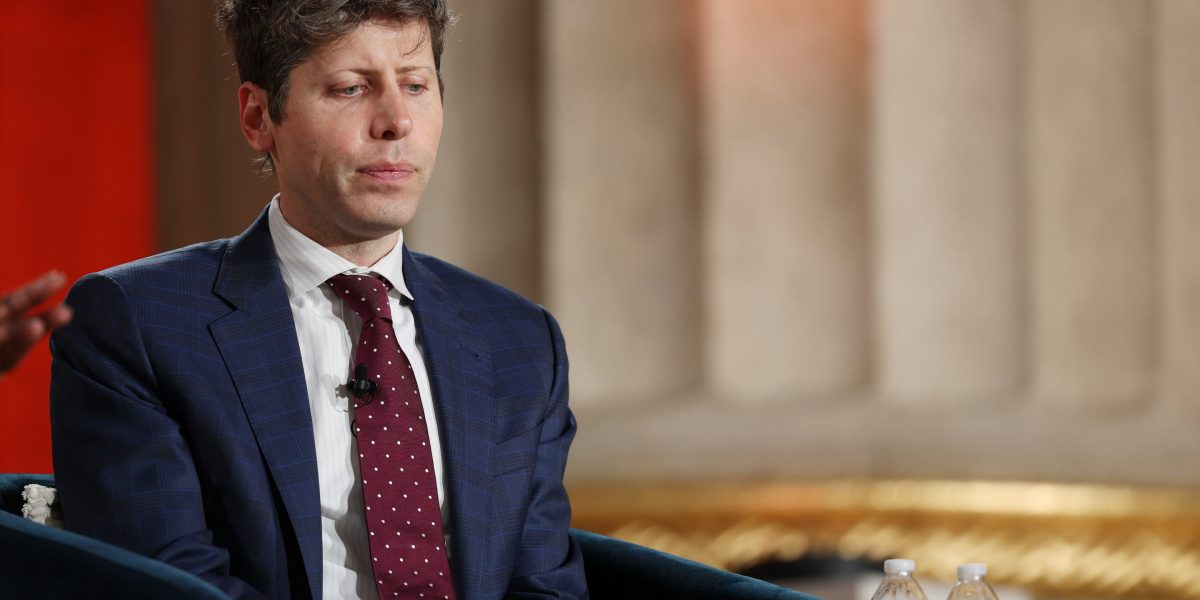
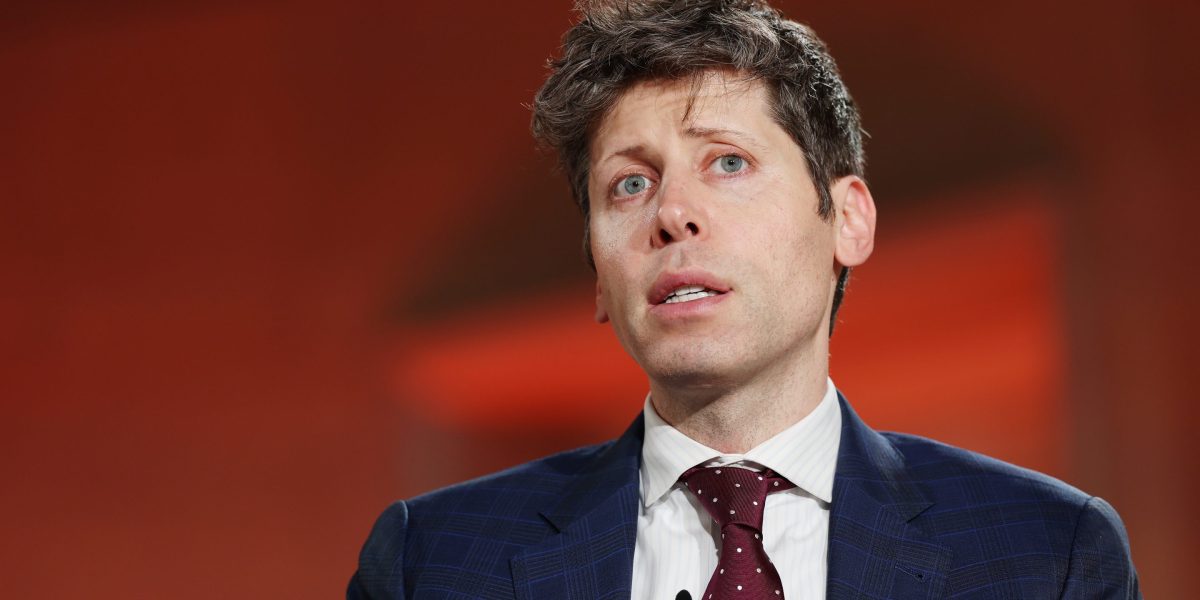
    Sam Altman wants Washington to tax AI’s winners — and he’s put it in writing.

    On Monday, OpenAI released a 13-page paper entitled “Industrial Policy for the Intelligence Age: Ideas to Keep People First.” It offers a sweeping policy blueprint that proposes tax hikes on corporate income, among other revenue-boosting levers that shift the tax burden from labor to capital. 

    “Policymakers could rebalance the tax base by increasing reliance on capital-based revenues—such as higher taxes on capital gains at the top, corporate income, or targeted measures on sustained AI-driven returns—and by exploring new approaches such as taxes related to automated labor,” the report reads.

    Even in the face of relentless warnings about AI’s presumed labor market disruption, the Trump administration has doubled down on an anti-regulatory stance on the technology’s development. In December, President Donald Trump signed an executive order reducing “burdensome” state rule and preventing “cumbersome regulation.”

    Fortune reached out to OpenAI for comment, inquiring about the AI policy proposal.

    The four-day work week, retraining, and a public wealth fund

    The proposal goes beyond mere tax policy. It offers a series of policies meant to focus the gains of AI on workers, including incentivizing firms to “retain, retrain, and invest in workers,” a four-day work week without a pay cut, and the creation of a “public wealth fund” that provides all U.S. citizens a stake in AI economic growth.

    Many of those policies sound like proposals coming from top leaders in business. JPMorgan Chase CEO Jamie Dimon also thinks AI will shave the work week down to three and a half days, and improve life, even curing some cancers. But he’s just as wary as Altman and other business leaders about the technology’s impact on the labor market. He has said he thinks the government should have the power to intervene in blocking AI-induced layoffs. And last month, the billionaire proposed a government-business incentive program meant to cushion workers impacted by AI-related job displacement. 

    “I don’t know the answer yet, but I would suggest it’s the following: It can’t be just government. It’s got to be business,” Dimon said in an interview at the Hill and Valley Forum. “But the government could create a system of incentives that business does the right thing to retrain people, early retirement, moving people.”

    In an interview with Axios, Altman recounted a conversation with a “senior Republican” who admitted that while they typically support free markets, they recognize that AI is seriously disrupting the economy. 

    “Capitalism has depended on some balance between labor and capital,” he said, citing the Republican. “Way too much leverage is going to be with capital and not with labor in the traditional sense.”

    The CEO has flip-flopped on regulation in the past. In 2023, Altman testified before Congress, urging the government to implement regulations for AI and emphasizing its potential risks. But less than a year ago, he appeared again in front of a Congress composed of those largely favorable to him, and called for regulation, but regulation that “does not slow us down.” His comments Monday mark a contrast to those delivered before Congress even a year ago.

    Akin to the New Deal and Progressive Era

    Many of these ideas, though, remain mere ideas. The president and the Republican-controlled Congress don’t appear to have an appetite for AI regulation. While Congress passed, and Trump signed the TAKE IT DOWN Act, a law regulating deepfakes, other efforts discourage strong regulation. The president last month released an AI policy framework for Congress that echoes his executive order, meant to build on efforts to protect children, but to discourage strong state laws that “hinder our national competitiveness.” However, the framework also includes a proposal meant to ensure workers benefit from AI growth through skill development and retraining.

    But it’s not the first time, OpenAI argues, that technology has threatened to leave workers behind, requiring strong regulation. The paper compares the current moment to the New Deal and Progressive Era.

    “Society has navigated major technological transitions before, but not without real disruption and dislocation along the way,” the paper reads. “While those transitions ultimately created more prosperity, they required proactive political choices to ensure that growth translated into broader opportunity and greater security.”

    [ad_2]

    Source link

  • How people are reacting to OpenAI’s 13-page policy paper on AI superintelligence

    How people are reacting to OpenAI’s 13-page policy paper on AI superintelligence

    [ad_1]

    OpenAI says the world needs to rethink everything from the tax system to the length of the workday in order to prepare for the wrenching changes of superintelligence technology—the point at which AI systems are capable of outperforming the smartest humans.

    On Monday, in a 13-page paper titled “Industrial Policy for the Intelligence Age,” OpenAI said it wanted to “kick-start” the conversation with a “slate of people-first policy ideas.” How much faith to put in OpenAI’s words and motives, however, seems to be one of the key questions among many of the people reading the paper. The paper was released on the same day that The New Yorker published the results of a lengthy one-and-a-half-year investigation into OpenAI that raised questions about CEO Sam Altman’s trustworthiness on various issues, including AI safety.

    Written by the OpenAI global affairs team, the paper outlines many of the expected economic impacts of superintelligence and floats various approaches for addressing them. “We offer them not as a comprehensive or final set of recommendations, but as a starting point for discussion that we invite others to build on, refine, challenge, or choose among through the democratic process,” said the introductory blog post. 

    The self-described “slate of ideas” in the document—spanning everything from public wealth funds to shorter workweeks—may not do much to reassure a public increasingly nervous about and disenchanted with the pace and consequences of AI-driven change. And OpenAI, of course, is one of the least neutral parties in this ongoing discussion, which is the core tension of the document, said Lucia Velasco, a senior economist and AI policy leader at D.C.-based Inter-American Development Bank and former head of AI policy at the United Nations Office for Digital and Emerging Technologies. 

    “OpenAI is the most interested party in how this conversation turns out, and the proposals it advances shape an environment in which OpenAI operates with significant freedom under constraints it has largely helped define,” she said, adding that this wasn’t a reason to dismiss the document, but “it is a reason to ensure that the conversation it is trying to start does not end with the same company that started it.”

    Still, she emphasized that OpenAI is correct in saying that governments are behind in advancing policy solutions. “Most are still treating AI as a technology problem when it’s actually a structural economic shift that needs proper industrial policy,” she said. “That‘s a useful contribution, and the document deserves to be taken seriously as an agenda-setting exercise, even if it’s a starting point.”

    Soribel Feliz, an independent AI policy advisor who previously served as a senior AI and tech policy advisor for the U.S. Senate, agreed that OpenAI deserves credit for “putting this on paper.” The acknowledgment that both U.S. institutions and safety nets are falling behind AI development and deployment is correct, she said, “and the conversation needs to happen at this level at this moment.” 

    However, she emphasized that most of what is being proposed is not new: “Some of these pillars—‘share prosperity broadly, mitigate risks, democratize access’—have been the framework for every major AI governance conversation since ChatGPT came out in November 2022.

    “I worked in the U.S. Senate in 2023–24, and we had nine AI policy fora sessions where all of this was said. I have it in my handwritten notes! All of this was already said, all of it,” she wrote to Fortune in a direct message. “The language around public-private partnerships, AI literacy, and worker voice reads like it came out of a Unesco or OECD AI policy framework report. The ideas are not wrong. The problem is the gap between naming the solutions and building real mechanisms to achieve them.” 

    Clearly, the target audience is not its hundreds of millions of weekly ChatGPT users. Instead, it is the Beltway policymakers who have been pushing for AI regulation (or kicking the can down the road) in various forms ever since ChatGPT was released in November 2022. In that sense, some said it represents an improvement over earlier efforts. 

    “I found this document to genuinely be a real improvement from previous documents that were even more floaty and high-level,” said Nathan Calvin, vice president of state affairs and general counsel of Encode AI. “I think some of the concrete suggestions around things like auditing or incident reporting and government restrictions on certain uses of AI are good ideas.” 

    But he also pointed to lobbying efforts led by OpenAI executives with the Leading the Future PAC, which lobbies for AI-industry-friendly policies. Global affairs head Chris Lehane is considered a force behind these efforts, while president Greg Brockman has been the biggest donor. 

    “I hope this document signals a move toward more constructive engagement, instead of attacking politicians pushing the very policies OpenAI is now endorsing,” said Calvin, pointing specifically to Leading the Future’s lobbying against New York congressional candidate Alex Bores, author and primary sponsor of the RAISE Act, the New York AI safety and transparency law recently signed by Gov. Kathy Hochul.

    Calvin has also accused OpenAI of using intimidation tactics to undermine California’s SB 53, the California Transparency in Frontier Artificial Intelligence Act, while it was still being debated. He alleged as well that OpenAI used its ongoing legal battle with Elon Musk as a pretext to target and intimidate critics, including Encode, which the company implied was secretly funded by Musk. 

    Still, while OpenAI CEO Sam Altman compared Monday’s slate of policy ideas to the New Deal in an interview with Axios, some say it reads less like FDR-era legislation and more like a Silicon Valley thought experiment that won’t magically turn into action.

    For example, Anton Leicht, a visiting scholar with the Carnegie Endowment’s technology and international affairs team, wrote on X that in reality, the ideas are fundamental societal changes and heavy political lifts. “They’re not just going to emerge as an organic alternative,” he wrote. “On that read, this is comms work to provide cover for regulatory nihilism.”

    A better version of this, he said, would be to redirect the AI industry’s political funding and lobbying skills to make progress on this kind of policy agenda. However, he said that the “vague nature and timing” of the document “doesn’t make me too optimistic.”

    [ad_2]

    Source link

  • Associated Press starts offering buyouts to newspaper journalists amid wider AI transformation

    Associated Press starts offering buyouts to newspaper journalists amid wider AI transformation

    [ad_1]

    The Associated Press, one of the world’s oldest and most influential news organizations, said Monday it is offering buyouts to an unspecified number of its U.S.-based journalists as part of an acceleration away from the focus on newspapers and their print journalism that sustained the company since the mid-1800s.

    The News Media Guild, the union that represents AP journalists, said more than 120 staff members received buyout offers on Monday.

    The news organization is becoming more focused on visual journalism and developing new revenue sources, particularly through companies investing in artificial intelligence, to cope with the economic collapse of many legacy news outlets. Once the lion’s share of AP’s revenue, big newspaper companies now account for 10% of its income.

    “We’re not a newspaper company and we haven’t been for quite some time,” Julie Pace, executive editor and senior vice president of the AP, said in an interview.

    Despite changes – the company has doubled the number of video journalists it employs in the United States since 2022 – remnants of a staffing structure built largely to provide stories to newspapers and broadcasters in individual states have remained.

    That has its roots well back in American history; the AP was started in the mid-19th century by New York newspapers looking to share the costs of reporting outside their immediate territory.

    Exact numbers of staff reduction unclear

    The number of AP journalists who will lose jobs is murky, in part intentionally. The AP does not say how many journalists it employs, though it has a large international presence as well as its U.S. staff. Pace said the AP’s goal is to reduce its global staff by less than 5%.

    Since buyouts are being offered now to only U.S. journalists, it stands to reason that the cut among that workforce will be more than 5%. Whether there are layoffs depends on how many people take the offer, Pace said.

    “The AP employs hundreds of talented journalists who are willing and able to adjust to the changing media landscape,” the union said in a statement. “However, the company refuses to offer them appropriate training and tools. Instead, AP continues to get rid of experienced staff and flirt with artificial intelligence — ignoring the opportunity to differentiate AP news stories as ones that are and always will be created by human journalists.”

    The union said AP ignored a request last week to bargain over artificial intelligence. The news outlet had no immediate comment on that claim, or the union’s estimate of how many people were offered buyouts. It’s not clear whether the buyout offers were concluded by Monday afternoon.

    Over the past four years, the AP’s revenue from newspapers has declined by 25%. Gannett and McClatchy, two of the largest traditional newspaper publishers, dropped AP in 2024.

    In recent days, the company learned that Lee Enterprises — publishers of newspapers like The Buffalo News, the St. Louis Post-Dispatch and the Richmond Times-Dispatch — is seeking an early exit from a contract due to expire at the end of 2026.

    Pace said the buyout plan was in the works before learning about Lee Enterprises. “We made a decision earlier this year that we needed to be bolder in this transformation,” she said.

    An even higher focus on the day’s biggest stories

    Besides the transition to more video capabilities, the AP is deploying rapid-response teams where staff members, no matter their geographic base, contribute to the day’s big stories, she said. The AP is putting more journalists on beats to break news on topics of known customer interest. But it is committed to maintaining a presence in all 50 states.

    “The AP is not in trouble,” Pace said. “We’re making these changes from a position of strength but we’re doing so now to recognize our changing customer base.”

    Those customers now are dominated by broadcast, digital and technology companies, an illustration of where people are getting news. The AP has seen 200% growth in revenue from technology companies over the last four years, said Kristin Heitmann, senior vice president and chief revenue officer.

    The AP was among the first news outlets to make a deal with an AI company, agreeing in 2023 to lease part of its text archive to OpenAI as it built out its capabilities. The AP launched on Snowflake Marketplace last year to license data directly to enterprises building their own system. It has launched AP Intelligence, a division designed to sell data to financial and advertising sectors, for example.

    Google contracted with AP last year to deliver news through the Gemini chatbot, the tech giant’s first deal with a news publisher.

    “If you can think of a large technology company,” Heitmann said, “they are a customer of ours.”

    Predictions markets now part of the picture for AP

    Last month, the AP agreed to sell U.S. elections data to Kalshi, the world’s largest predictions market.

    AP’s long tradition in counting and analyzing elections data is another growth area; the company saw a 30% increase in customers between the 2020 and 2024 cycles. It got an additional boost last year when ABC, CBS, NBC and CNN signed on to the service.

    The company, traditionally a wholesaler of news to other companies, has also seen growing interest in its direct-to-consumer product, apnews.com, which provides revenue through advertising and donations.

    The new business frontiers do not indicate a weakening in the AP’s standards of providing fast, accurate, non-biased news, leaders said. “It anything, it makes it more important that we retain these values as we make the transition,” Pace said.

    The AP is trying new forms of fact-checking, including use of video, and more often putting its journalists in public to explain how they got particular stories, she said.

    “I think that authenticity, and the fact that you can associate a real person who is often quite experienced and quite deep on their beats … it builds more credibility,” she said. “We’re really trying to embrace that because I do think it’s vital when there is so much misinformation out there.”

    [ad_2]

    Source link

  • Robinhood Ventures rebounded 30% since its debut. Can the private markets fund withstand mega IPOs?

    Robinhood Ventures rebounded 30% since its debut. Can the private markets fund withstand mega IPOs?

    [ad_1]

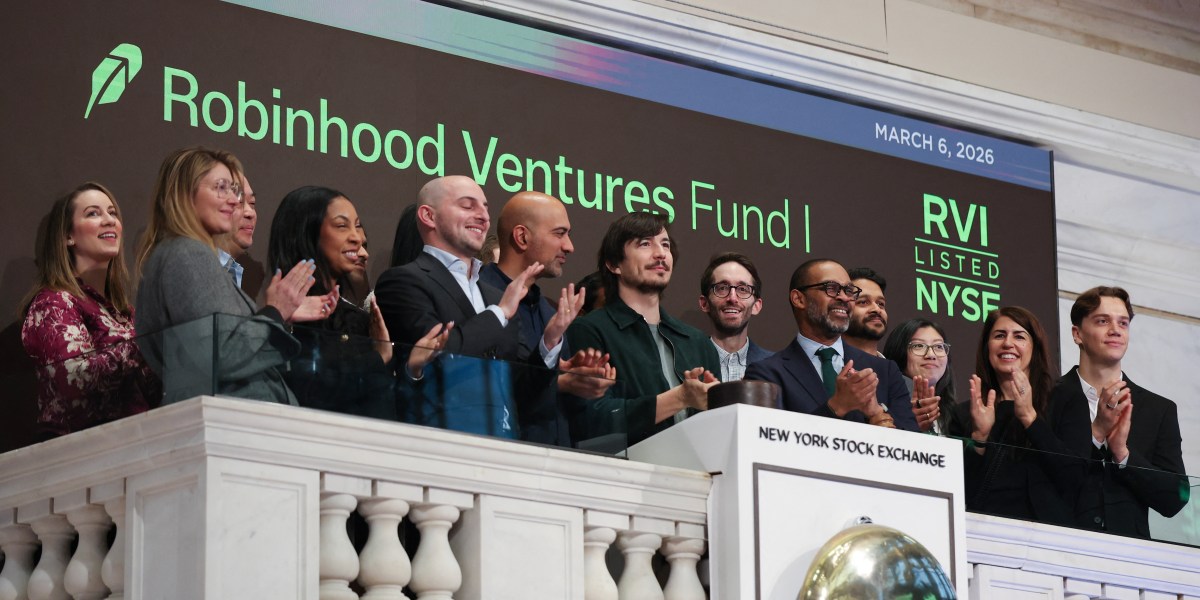
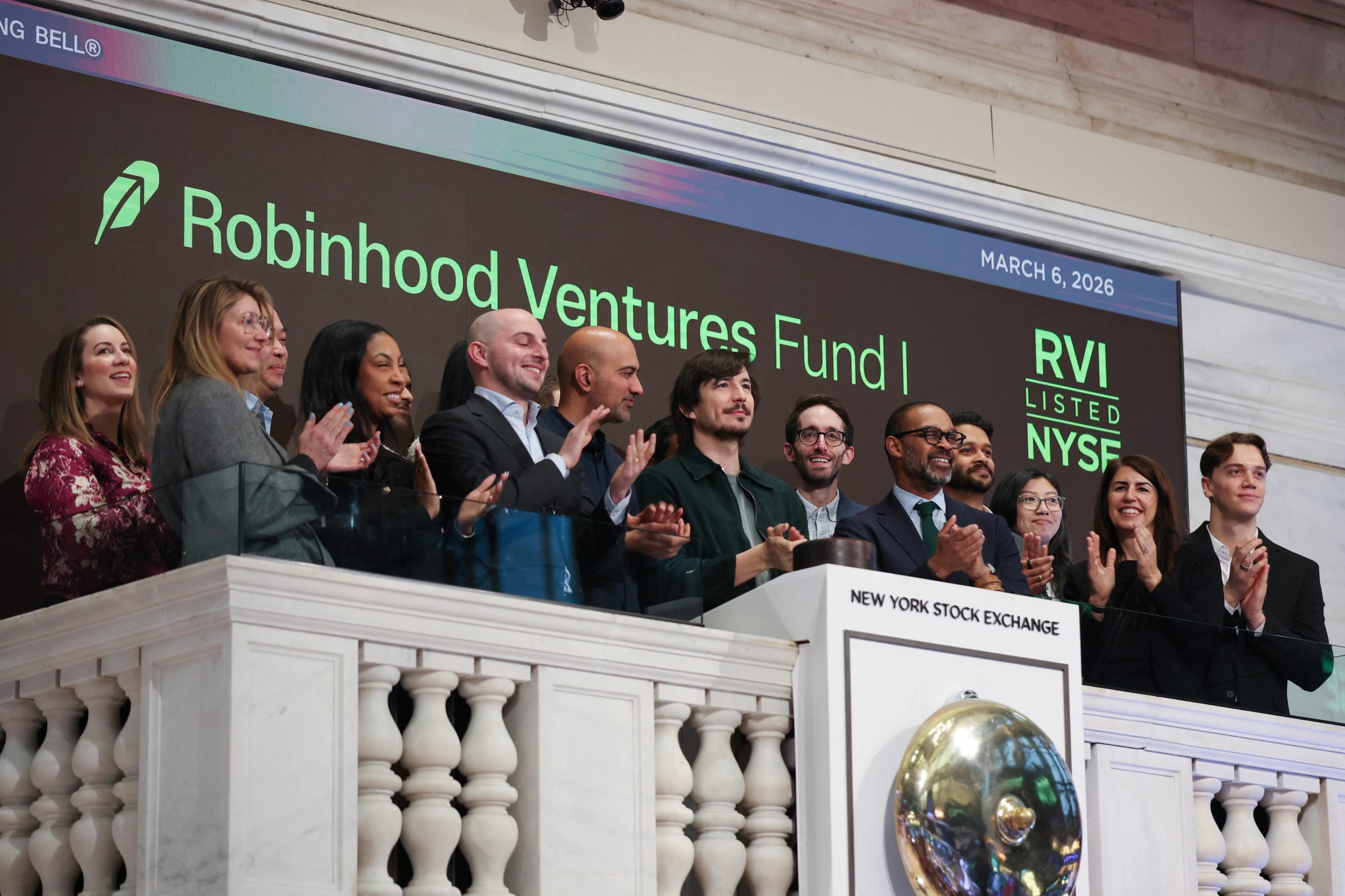
    In early March, Robinhood’s latest investment product got off to a less-than-stellar start. After CEO Vlad Tenev rang the opening bell on New York Stock Exchange to celebrate the launch of a new private markets fund, the offering tumbled 16% in one day.

    Since then, the investment vehicle—which aims to give retail investors exposure to late-stage, private companies through bundling together their equity into one fund—has rebounded 30%. But, now the fund, dubbed Robinhood Ventures I, is facing a new test. Analysts have warned that the debut of massive tech companies like SpaceX, OpenAI, and Anthropic may play short-term havoc with private markets and the prospects for other big-time firms like Stripe. If SpaceX performs poorly, secondary markets for smaller private companies may slump and the perceived IPO window for buzzy tech firms may close, said PitchBook

    Is Robinhood’s attempt to let retail investors get a piece of private markets too little, too late?

    Sarah Pinto, the head of Robinhood Ventures, told me that those worries are short-term at best. A veteran venture capitalist who spent almost eight years investing at Laurene Powell Jobs’ Emerson Collective, she believes that there will be “tons of opportunities” to notch returns in the years to come. (At Emerson Collective, she backed OpenAI, Anthropic, and Coinbase, among others.)

    As the models powering the AI economy continue to improve, Pinto predicts that companies will build an ecosystem of applications that take advantage of OpenAI or Anthropic’s tech. “I actually think this wave of innovation will probably be bigger than any of the previous ones, and that we’re actually just at the beginning,” she said.

    So far, Pinto has led Robinhood Ventures to take stakes in only a select group of late-stage companies. These include fintechs like Airwallex and Stripe and AI powerhouses like Databricks and Mercor. Robinhood either invests in primary rounds or buys shares on the secondary market with explicit permission from the startups, she said. 

    That approach may be unremarkable among most venture outfits but it stands apart from the online brokerage’s controversial experiment with stock tokens. Announced in June, the effort promised European investors blockchain-based exposure to companies like OpenAI and SpaceX. After Robinhood unveiled the product, OpenAI came out with a blistering post on X: “We did not partner with Robinhood, were not involved in this, and do not endorse it.”

    Pinto wasn’t at Robinhood when the online brokerage announced the initiative and isn’t involved with stock tokens now. Rather, she’s focused, like any venture investor, on persuading buzzy companies to let Robinhood join their cap table. 

    She argues that those who let Robinhood Ventures buy equity can have a broader set of investors profit from their startups’ growth—an attractive proposition for firms who want a more diverse set of stakeholders. And Pinto said Robinhood’s platform spotlights its portfolio through founder interviews and bios, among other methods.

    While Robinhood Ventures aims to currently invest in late-stage startups, Pinto didn’t discount the possibility of making bets on younger firms: “We call this Robinhood Ventures I for a reason.”

    See you tomorrow,

    Ben Weiss
    X:
    @bdanweiss
    Email: benjamin.weiss@fortune.com
    Submit a deal for the Term Sheet newsletter here.

    Joey Abrams curated the deals section of today’s newsletter. Subscribe here.

    VENTURE DEALS

    SpectronRx, an Indianapolis-based radiopharmaceutical developer and manufacturer, raised $85 million in funding from OrbiMed.

    Noon, a San Francisco-based AI-powered product design platform, raised $44 million in Series A funding from Chemistry, First Round, Scribble Ventures, SV Angel, Afore Capital, and Elevation Capital.

    Moonbounce, an Oakland, Calif.-based platform designed to control AI behavior, raised $12 million in funding. Amplify Partners and StepStone Group led the round and were joined by angel investors.

    OTHERS

    Supplier.io acquired Tealbook, a Thornhill, Ontario-based data management technology company. Financial terms were not disclosed.

    PEOPLE

    Battery Ventures, a Boston-based venture capital firm, promoted Max Schireson and Rolan Anderson as investing partners. 

    [ad_2]

    Source link

  • AI and job loss: the identity crisis no one is preparing for

    AI and job loss: the identity crisis no one is preparing for

    [ad_1]

    On November 7, 2023, my career ended. Not with a dramatic firing, not with a bitter exit, but with an acquisition that made my role redundant. Nearly three decades in the industry. Nine years in an executive role at a biotech company. And then: nothing.

    I didn’t just lose a job. I lost the scaffolding I’d built my professional identity on. I told myself it was a blip. I was wrong.

    What followed was something I’ve come to call “professional identity purgatory”—a seemingly endless holding pattern with no title, no structure, and no clear direction. It’s the space between who you were professionally and who you might become.

    In Catholic theology, purgatory is the in-between—not heaven, not hell, but a passage of purification before something better. That’s the metaphor I keep returning to because “professional identity purgatory” isn’t failure, it’s transition with no timeline. It’s the disorienting gap between losing an identity you’d spent decades building and not yet knowing what replaces it.

    We are currently in a period defined by significant professional transition. Millions of people are likely about to enter “professional identity purgatory” thanks to AI. I’m not an economist or a technologist, but what I do know—from living it, and from watching peers navigate it—is that the threat AI potentially poses to professionals goes deeper than lost tasks or restructured roles. It strikes at something more fundamental: the sense that what you spent your career mastering still matters. For generations, professional identity was durable—you built expertise, accumulated knowledge, climbed. Technology is disrupting that continuity in ways that are genuinely hard to sit with, not because the work disappears overnight, but because professional relevance starts to feel less certain. For people whose self-worth is tied to that relevance, the uncertainty alone can be destabilizing.

    For people who’ve built their self-worth around titles, expertise, and relentless forward momentum, purgatory is particularly brutal. We don’t do well in holding patterns. We fill them with activity, with meetings, projects, and anything that mimics the rush that comes with progress. We avoid the discomfort at all costs, because the discomfort forces a reckoning we’ve spent our careers outrunning: Who am I without the work?

    What I’ve Learned (and am Still Learning) Inside Purgatory

    I want to be clear: I don’t have a framework, tools or tips on how to handle purgatory because I’m not on the other side yet. But I’ve been living in “professional identity purgatory” long enough to offer a few observations for those who may join me soon.

    Stop filling voids with noise. My first instinct after leaving was to pack my calendar with things that felt familiar—networking coffees, mentoring conversations, advising. All legitimate. All also avoidance. Purgatory is uncomfortable by design. It’s trying to tell you something. The busier you stay, the harder it is to hear the message.

    Let your identity be provisional. I still catch myself introducing myself with my old title—only now with a “former” as a qualifier. There’s no shame in that. Shaping your identity isn’t a quick iPhone OS update. The work in purgatory is learning to hold your professional self loosely—to try on new versions of yourself rather than defend the old one.

    Redefine what expertise means. AI may automate much of the world around us. But it can’t touch judgement. Relationships. Context. The capacity to ask the right question rather than just answer the one in front of you. Those things don’t disappear with your title. They just need a new vehicle.

    “Professional identity purgatory” is not a detour. For many of us, it may be the most important time in our careers—the place where the question we’ve been outrunning finally catches up: not “What do I do now?” but “Who am I when I’m not doing it?”

    The professionals facing AI-driven disruption in the coming years won’t all lose their jobs overnight. But when it does happen, many will be met with the realization that their professional role was directly tied to their sense of self. The structure. The daily purpose. The identity.

    When that happens, the instinct will be to run—to fill the void, project confidence, land the next thing as fast as possible. I’ve tried all of it. I understand the impulse.

    But the purgatories we run from are very often the ones we need most. I’m still in mine. I’m tired of running. And for the first time in thirty years, I’m learning what it feels like to simply be still.

    Geoff Curtis is the former executive vice president, corporate affairs and chief communications officer at Horizon Therapeutics. During his nearly 30-year health care communications career, he has worked domestically and internationally in various roles on both the client and agency side. This column is adapted from his book, Embracing Your Own Purgatory, which is available now.

    [ad_2]

    Source link

  • Italy sets jet fuel limits at some airports on supply gap

    Italy sets jet fuel limits at some airports on supply gap

    [ad_1]

    Several airports in Italy issued advisories of limited fuel supplies for the next few days as the conflict in the Middle East shows few signs of ending. 

    Fuel restrictions for flights have been introduced at the airports of Bologna, Milan Linate, Treviso and Venice, according to a Notice to Airmen, or Notam advisories. 

    At Venice, authorities said that priority will be given to medical, state and flights longer than three hours. For other flights under three hours, a maximum of 2,000 liters per aircraft may be applied. Similar provisions are included in notices for Bologna and Treviso. The notices span from April 2 through to April 9.

    The advisories say Air BP Italia’s fuel jet A1 availability is limited. 

    The restrictions in Italy are among the earliest instances that fuel shortage in Europe are starting to impact operations since the conflict broke out in the Middle East and led to the effective closure of Strait of Hormuz — choking of supplies of crude, gas and products such as jet fuel to global customers.

    Italian airport operator Save SpA, which manages the Venice, Treviso and Verona airports, told Italian daily Corriere della Sera that fuel limitations aren’t significant, relate to a single supplier, and that other providers are active across its airports. The company added that operations for intercontinental and Schengen-area flights aren’t subject to restrictions.

    Pierluigi Di Palma, head of Italy’s civil aviation authority ENAC, told the newspaper the situation is “under control” despite heightened tensions in the sector. The executive said he doesn’t see issues that should concern travelers, but noted potential risks could emerge after April if supply pressures persist.

    Europe is the main importer of jet fuel — including kerosene — from the Persian Gulf, with supplies from that region accounting for about half of European Union and UK imports, according to Vortexa data compiled by Bloomberg News.

    Deutsche Lufthansa AG, Europe’s biggest aviation group, has readied plans including potentially grounding planes in case demand drops and fuel prices escalate as hostilities in the Middle East drag on.

    Separately, International Energy Agency Executive Director Fatih Birol told the Financial Times that there are currently “no physical shortages of jet fuel or diesel in Europe at the moment.” However, he warned that the situation may change in the coming weeks if the disruption to Middle East flows continues.

    [ad_2]

    Source link

  • Even if Iran’s regime outlasts Trump, it may not survive reconstruction of the shattered economy

    Even if Iran’s regime outlasts Trump, it may not survive reconstruction of the shattered economy

    [ad_1]

    Tehran has been embolden by its ability to maintain tight control over the Strait of Hormuz and its own population. But even if the regime survives the war against the U.S. and Israel, its biggest challenge may come afterward.

    For now, there’s little sign of de-escalation as President Donald Trump has vowed to obliterate Iran’s economy if Tehran doesn’t reopen the strait in the next few days, while the Islamic republic continues bombarding its Persian Gulf neighbors.

    Both sides are already targeting civilian and energy infrastructure, boosting postwar rebuilding costs everyday. But while the Gulf states boasted thriving business sectors before the conflict, Iran’s economy was already in shambles, leading to domestic unrest that prompted a brutal crackdown.

    Still, the regime’s ability to stay in power, resist Trump’s threats, and weaponize the Strait of Hormuz shouldn’t be mistaken as evidence it will survive, according to Burcu Ozcelik, a senior research fellow for Middle East security at the Royal United Services Institute.

    “It risks treating a political outcome as predetermined, leaving too little room for the possibility that pressures from below, including from Iranian opposition voices and a war-weary public, could still shape the direction of events,” she wrote in an analysis on Thursday. “It also overlooks the possibility that hardening may generate not only endurance, but brittleness: a post-war system that appears more entrenched yet is less capable of absorbing internal shocks without fracturing.”

    Once the fighting ends, Tehran must somehow rehabilitate relations with its neighbors to restore the commercial and financial channels that gave the regime access to the global economy, Ozcelik explained.

    Gulf states were vital conduits for Iran in skirting Western sanctions, allowing it to generate oil revenue. But after the war, they are unlikely to go back to the earlier status quo without guarantees from Tehran on their future safety, she added.

    In fact, there may be no going back. The United Arab Emirates, which long had deep commercial ties with Iran, is revoking visas of Iranians in the UAE and may freeze Iran’s assets in country.

    Gulf neighbors have also signaled that Trump must continue the war until Iran’s hold on the Strait of Hormuz is broken, with the UAE and Saudi Arabia even contemplating joining the fight.

    Unless the war ends with substantial easing of sanctions, Iran’s “economic strain ahead will be shaped by the war’s extensive damage and by Iran’s own exposure to the consequences of escalation,” Ozcelik predicted.

    She also pointed out that prolonged disruption of the oil trade drives up market volatility, threatens Iran’s export position, and risks angering its main oil buyer, China. At the same time, Iran can’t put its economic recovery hopes on being a “toll booth” in the Strait of Hormuz, where it acts as a gatekeeper and collects payments from ships it approves.

    ‘Creating different incentives for the elite’

    Instead, Tehran may have to look to negotiated, conditional sanctions relief—but that’s where the catch is, according to Ozcelik.

    Bringing more of Iran’s economy out of the shadows and into formal, regulated channels could weaken some of the structures that empowered pillars of the regime, like the Islamic Revolutionary Guard Corps, she said.

    That doesn’t mean lifting sanctions will lead to democracy in Iran, and the war will strengthen the IRGC in the near term, Ozcelik cautioned.

    “But the scale of reconstruction required after damage to major energy and industrial infrastructure will be severe, and that will put pressure on the very patronage system that has helped hold the regime together,” she wrote. “Over time, conditional re-entry into regulated economic channels could begin to weaken parts of the pre-war economy, creating different incentives for the elite and create opportunities for domestic political opposition.”

    However, a critical question is whether the U.S. will have the patience to wait and see how changes in Iran’s political economy actually shift “the balance of interests inside the system,” Ozcelik warned.

    Indeed, the war may come to a head in the next few weeks as Trump deploys thousands of troops to the region for a potential ground assault meant to reopen the strait.

    But in the meantime, Iran’s economy continues to deteriorate. Inflation has worsened and apparently is so bad now the government issued its largest-ever currency denomination: the 10 million rial note (equivalent to about $7).

    The new currency went into circulation last month, according to the Financial Times, and came just a month after the prior record holder, the 5 million rial, came out.

    As prices continue to spiral higher while the war boosts demand for cash, long lines formed to withdraw the fresh banknotes, and supplies quickly ran out. Doubts about the viability of the banking system have grown during the war as the U.S. and Israel target the regime’s levers of control.

    In addition to bombing IRGC and Basij paramilitary forces, a data center for Bank Sepah was also hit on March 11. Sepah is the country’s largest bank and is responsible for paying salaries to the military and IRGC.

    “Iran is already in the middle of a severe cash liquidity crisis,” Miad Maleki, a senior advisor at the Foundation for Defense of Democracies and a former Treasury Department official, said on X last month. “As of Jan 2026, banks were running out of physical banknotes daily, with informal withdrawal caps of just $18–$30/day. Cash in circulation surged 49% YoY due to panic hoarding. The regime simply cannot pivot to cash payments, there isn’t enough physical currency in the system.”

    [ad_2]

    Source link